

Room Guides
How to Make a Cold Room Feel Cozy Without Spending Much
How to make a cold room feel cozy without spending much. Warm lamps instead of the ceiling light, a rug, a blanket, and one plant, even in a rental.
3 min read
Stop buying lamp shades that don't fit. Simple rules for getting the size, shape, and fitting right, plus how to match your floor and table lamps.

(Note: This post contains affiliate links. If you purchase through these links, we may earn a small commission at no extra cost to you. We only recommend products we genuinely find useful.)
I have a cupboard with three lamp shades in it that do not fit anything. One was too small and made the lamp look like it was wearing a thimble. One had the wrong fitting and would not attach at all. The third was a gorgeous dark blue that turned out to block so much light the room felt like a cave. So before you order anything, learn from my cupboard of mistakes.
Choosing a shade really comes down to three things. It has to be the right size, the right shape for the room, and it has to physically attach to your lamp. Most people only think about the third one after the box arrives.
Picture a lamp that looks slightly off but you cannot say why. Nine times out of ten, it is the shade size.
There is a rough rule that works well for table lamps. The shade wants to be about two thirds the height of the base. Taller than that and the lamp goes top-heavy. Shorter and it looks stumpy, like the shade shrank in the wash. Width matters just as much, and the shade should be wider than the fattest part of the base so the whole thing looks balanced instead of pinched in the middle.
One detail people miss until it annoys them every evening. The shade has to be deep enough to hide the bulb and the metal bits inside. If you can see the bulb glaring out below the rim when you sit down, the shade is too short, and you will notice it every time.
So measure the base before you shop. Height and width, written on your phone. It takes thirty seconds and it is the single thing that saves you a return.
Floor lamps follow the same logic but bigger. They stand higher and light more of the room, so they usually take a wide drum shade that suits the height of the stand. A skinny shade on a tall floor lamp looks stranded.
Once the size is sorted, the shape decides the feel.
A drum shade is the straight-sided one, like a wide cylinder. It suits modern and contemporary rooms and throws light evenly up and down, which is why it ends up on so many lamps. If you want the same clean look but slimmer, a tall cylinder gives you height without spreading wide.
Older or more formal lamps tend to suit a tapered shade, wider at the bottom than the top. It reads as traditional and classic. There is also the coolie, a steep dramatic taper that pushes light down and out, which is handy over a reading chair or a side table where you actually want the light pooling below.
Do not overthink the names. Straight drums lean modern, gentle tapers lean traditional, and you match whichever to the room you are putting it in.
Here is the part that catches everyone, including me. A shade has to connect to your lamp, and there is more than one system for doing that.
A spider fitting sits on a wire frame called a harp and is held in place by a little screw cap on top. You see this a lot on table lamps. A clip fitting skips the frame and clips straight onto the bulb, which suits small lamps and candle-style bulbs. And floor or standard lamps often use a wider fitting all of their own, which is why a table lamp shade will sometimes refuse to sit on a floor lamp no matter how you wrestle it.
The safe move when you are replacing a shade is to take the old one to the shop, or at least photograph how it attaches. A beautiful shade in the wrong fitting is just an expensive cupboard ornament, and I would know.
The fabric or glass you choose changes the light more than people expect.
Pale and white fabric shades let plenty of soft light through and keep a room bright. That is the easy, do-anything choice. Go darker and the shade blocks light through the sides and forces it up and down instead, which gives a moodier, more focused glow. That can be lovely next to a sofa and a disaster as the only light in a room, which is roughly the mistake my blue shade made.
Coloured glass and crystal shades are a different thing again. They cast warm, tinted light and look good even switched off, so they work when the lamp is meant to be a bit of a showpiece rather than your main reading light. They cost more, so be honest about whether the lamp is doing a decorative job or a practical one before you spend.
People often want their floor lamp and table lamp to match, and that is a fair instinct, but identical is not the goal. Two matching lamps at different heights can actually look a little flat and showroomy.
The trick is to match the shade, not the whole lamp. Same shade shape, same colour, different bases, and the two lamps read as a pair without being clones. It looks more considered, and it is far easier to shop for, since you are no longer hunting for an exact twin of a base you bought three years ago.
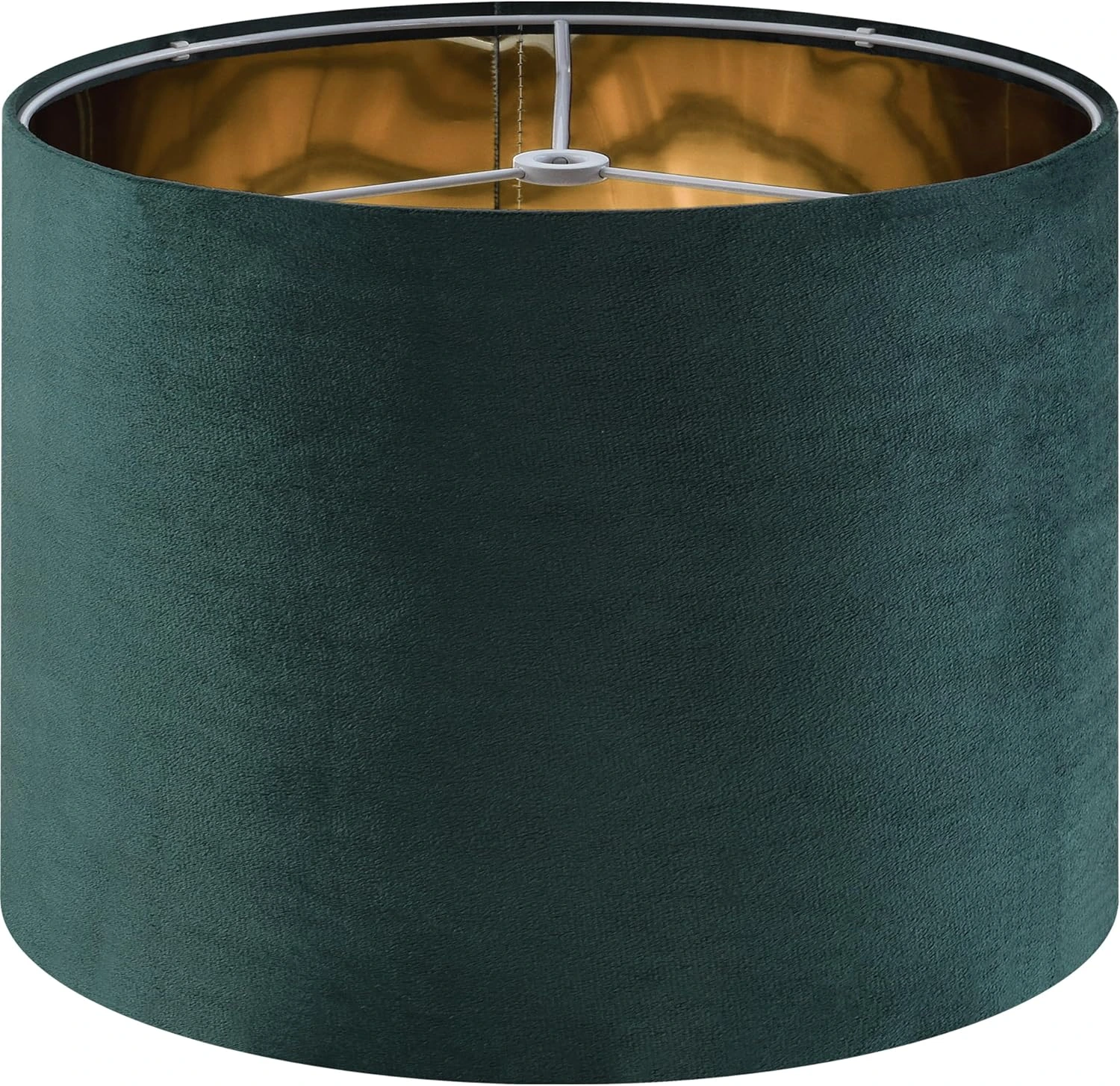
A luxurious deep green velvet drum shade that adds a rich pop of color and texture. Perfect for bringing a warm, modern feel to any table or floor lamp.
Check Price on Amazon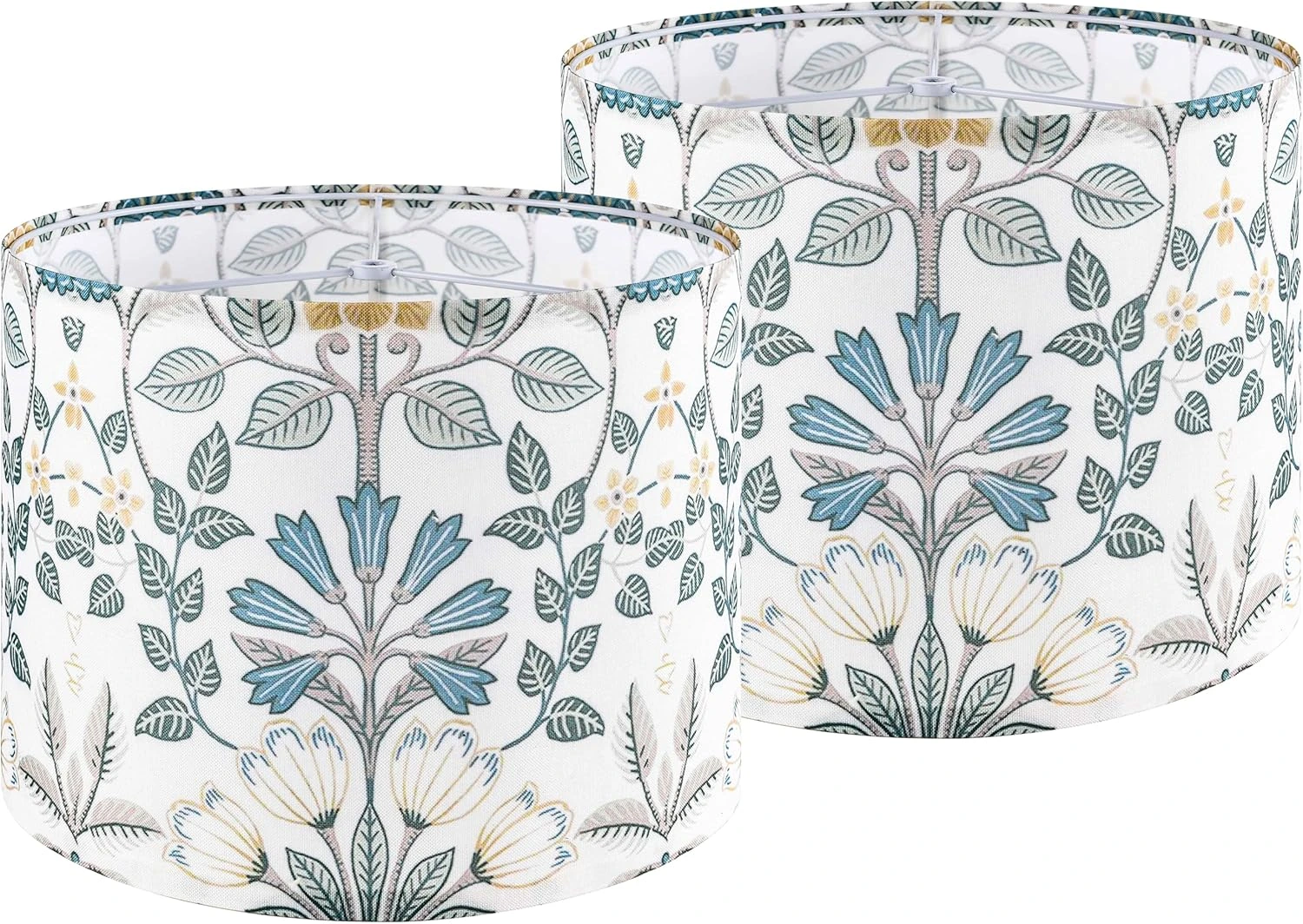
A beautiful, fresh botanical floral print on a classic off-white background. This shade brings a calm, natural vibe and looks much more expensive than it is.
Check Price on Amazon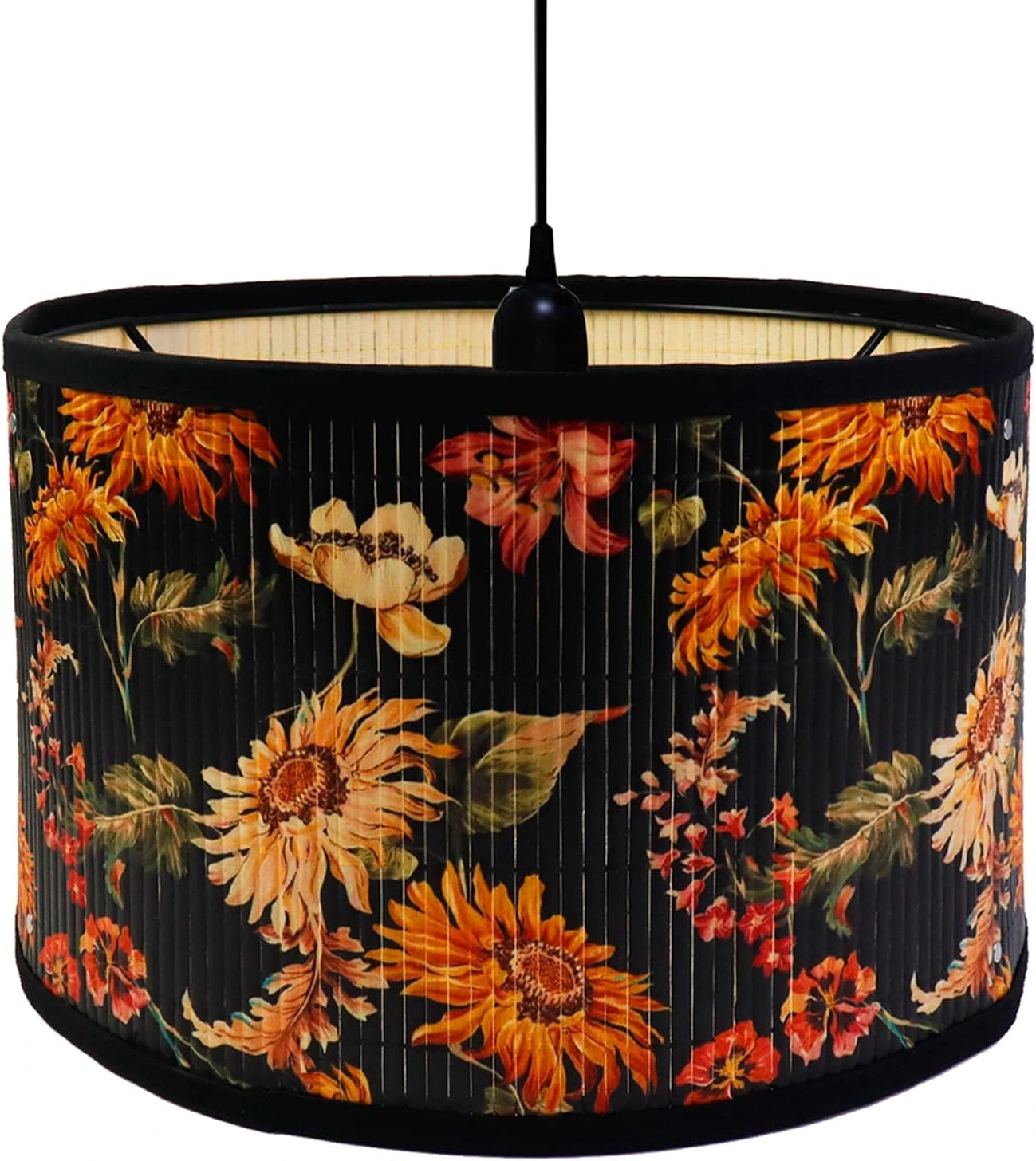
A striking dark shade with a unique vintage floral pattern. It blocks outward light to push a warm, focused glow up and down, ideal for creating a moody, cozy corner next to a sofa.
Check Price on AmazonA shade that looks stunning on a website can be wrong for the actual spot in your home, so think about what the lamp is for.
In a living room you usually want warm, soft light to relax under, which points to pale drums on the table lamps and a bigger drum on the floor lamp. By a bed you want a gentler glow, and a shade that throws light downward helps if you read. A hallway or console lamp is half decoration, so that is the place to risk the coloured glass or the more characterful shade, because it is not pulling hard practical duty.
If you only fix one thing, go and look at a lamp in your home that has always seemed slightly wrong. Measure the shade against the rules up top. Most of the time the lamp is fine and the shade is just too small, and a correctly sized replacement fixes the whole thing for the price of a shade rather than a new lamp.
Written by
Sarah BigelowLead Designer & Founder, Bigelow Designs
Sarah Bigelow is the lead designer and founder of Bigelow Designs. With over 15 years of experience in residential interiors, she tests every layout, material, and fixture in real homes before recommending them.
Keep reading
How to make a cold room feel cozy without spending much. Warm lamps instead of the ceiling light, a rug, a blanket, and one plant, even in a rental.
3 min read
Explore practical home decor ideas for every room and budget, with clear tips on layout, lighting, color, safety and renter-friendly updates.
9 min read
Interior design styles explained simply: modern, traditional, mid-century, Scandinavian, boho, and more, plus how to find the one that fits you.
7 min read
The Insider Circle
Craving more interior inspiration? Watch our exclusive behind-the-scenes room tours on TikTok and join our Facebook community for daily design secrets.
Join the conversation
Thoughts, questions, or your own experience with this piece? Sign in with your Facebook profile to reply.

