

Room Guides
How to Design a Room Like an Interior Designer: 13 Numbers
How to design a room like an interior designer, in the right order, with the 13 measurements pros work to and what each step costs if you hire it.
15 min read
Refresh your home for fall with 15 practical décor ideas using color, texture, lighting, natural accents and pieces you can reuse every year.
Good fall décor should make your home feel warmer, more layered, and more inviting without making it look like someone else’s seasonal display.
The easiest method is to work in three layers:
This approach works whether you love deep rust and plaid, quiet neutrals, forest colors, playful Halloween pieces, or a mix collected over time.
If you are decorating for fall for the first time, do not start with the whole house. Choose one place you see every day:
Give that zone one color story, one tactile layer, and one seasonal focal point. Once it feels complete, decide whether the rest of the room needs anything.
Fall décor does not require bright orange.
Look at the room’s permanent colors and move them one step warmer or deeper:
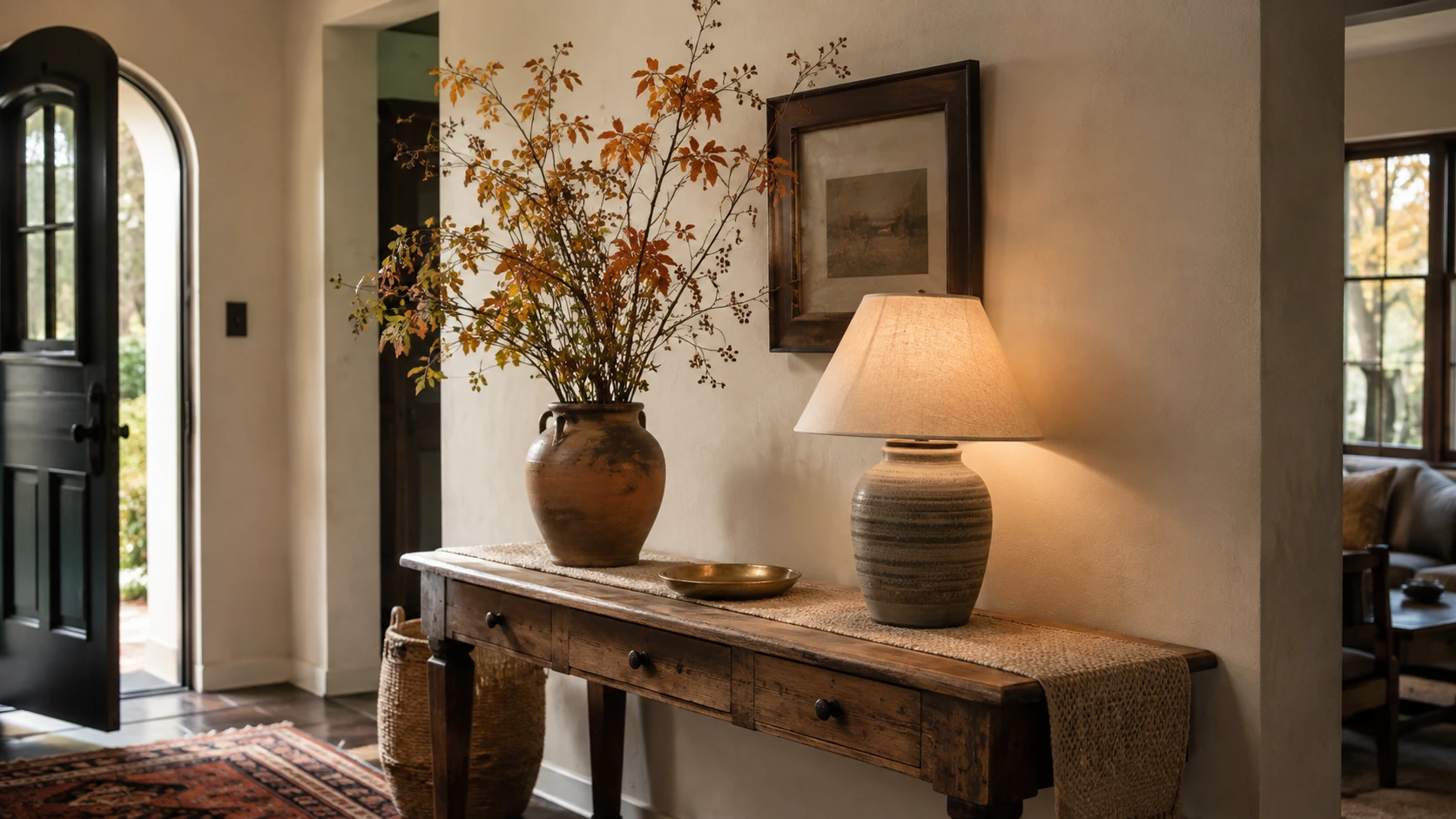
A room feels more intentional when the seasonal story has a clear beginning.
Try one:
One focal point usually has more impact than ten tiny objects scattered across unrelated surfaces.
Pillow covers are easier to store than complete pillows and let you change color and texture without filling a closet.
Choose one or two:
Keep some of the everyday pillows in the mix so the room still feels like yours.
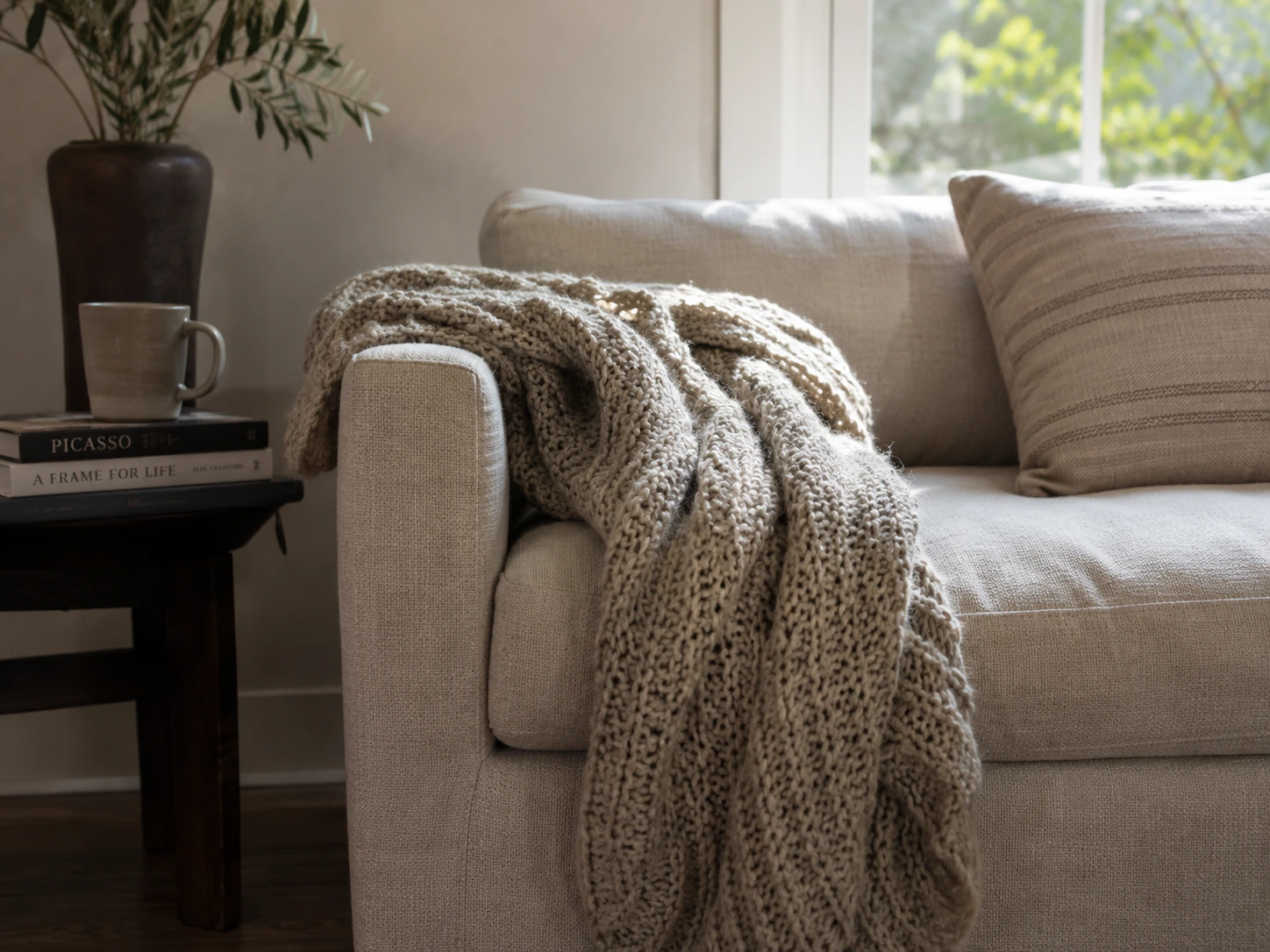
A throw changes both how a room looks and how it functions. Drape it where someone will actually use it: over the arm of a sofa, across the end of a bed, or in a basket beside a reading chair.
Texture often communicates the season more gracefully than a printed slogan. Think nubby weave, brushed surface, quilted stitching, or soft fringe.
A table runner can soften a dining table, console, island, or sideboard. It also defines the area where the rest of the display belongs.
For a calmer arrangement, let the runner provide pattern and keep the objects simple. For a maximal display, use a solid runner as the visual base.
Branches, seed heads, grasses, or dried flowers bring height and movement without requiring a shelf full of ornaments.
Match the arrangement to the location:
The entry is a practical place to decorate because it sets the tone without affecting the entire home.
Combine:
Leave enough clear space for keys, bags, doors, and switches. Seasonal décor should not make everyday routines harder.
Use a shallow bowl, a row of bud vases, or a low grouping of pumpkins and foliage. Keep the arrangement low enough for guests to see one another.
Before committing, set the table with plates and serving dishes. A centerpiece that only works on an empty table is not ready for dinner.
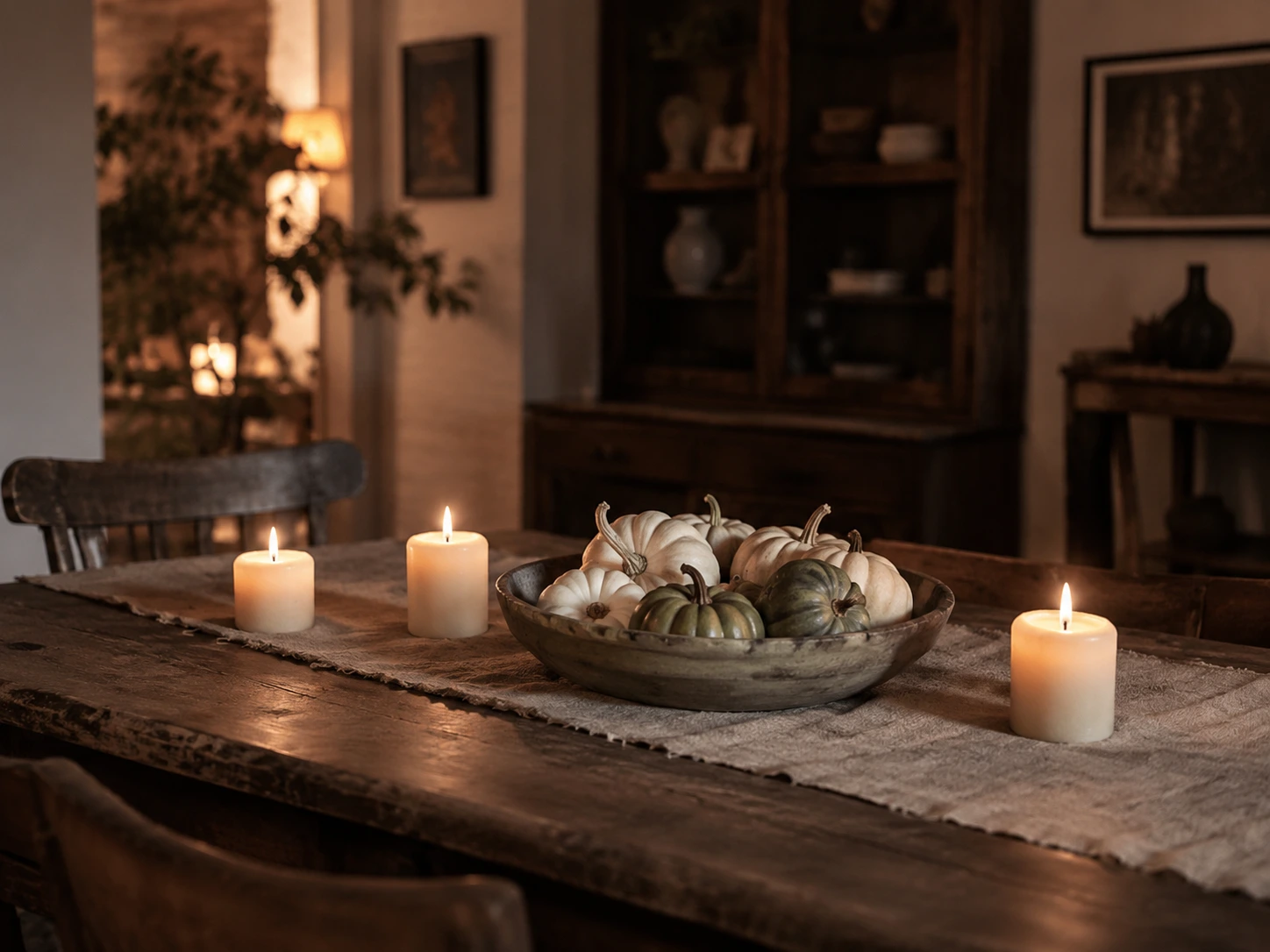
As daylight changes, lighting may do more for the feeling of a room than another basket of decorations.
Use:
Open flames and dry seasonal décor are a risky combination. Keep foliage, paper, fabric, and garlands well away if using real candles, or rely on quality flameless candles as a safe default.
A print, textile hanging, framed leaf study, or small landscape can bring fall color to a room without taking up a surface. Use an existing frame if possible and store prints flat.
Warm wood, woven baskets, aged metal, pottery, and clothbound books already carry the texture people often seek in seasonal rooms. Bring a few forward and store summery accessories away temporarily.
There is no universally perfect material choice:
Seasonal scent is highly personal. Instead of layering several scented products, choose one subtle source—or keep the space fragrance-free if allergies or pets are a concern.
Build a general fall base first: warm textiles, branches, pumpkins, wood, and baskets.
For Halloween, add a smaller layer of bats, dark accents, or jack-o’-lanterns. Remove that layer after October and let the base carry smoothly into Thanksgiving.
There is no fixed calendar rule:
Use deeper versions of colors already in the room, such as olive, navy, burgundy, camel, walnut, smoky teal, or warm cream.
Choose one zone you see often: an entry console, coffee table, dining table, mantel, or reading corner.
Use a limited palette, one clear focal point, and fewer larger accents. Leave functional space and avoid rigid matching themes.
Written by
Bigelow Designs EditorialKeep reading
How to design a room like an interior designer, in the right order, with the 13 measurements pros work to and what each step costs if you hire it.
15 min read
Hallway ideas require 36 inches of clear walking width and 100 to 150 lux. Learn exact clearance math, runner margins, and shallow storage sizing.
9 min read
Explore practical home decor ideas for every room and budget, with clear tips on layout, lighting, color, safety and renter-friendly updates.
9 min read
The Insider Circle
Craving more interior inspiration? Watch our exclusive behind-the-scenes room tours on TikTok and join our Facebook community for daily design secrets.
Join the conversation
Thoughts, questions, or your own experience with this piece? Sign in with your Facebook profile to reply.

