

Kitchen Guides
Kitchen Design: The €35 Searches Nobody Writes About
Kitchen inspiration searches are cheap and crowded. Hiring searches cost 30x more and nobody serves them. Plus the NKBA numbers your 10x10 plan has to hit.
10 min read
Japandi kitchens look expensive and unreachable. They aren't. Here's how to get the warm, calm, clutter-free look on any budget, even if you rent.

Japandi is one of those styles that looks impossible to pull off unless you own a magazine-ready home. You have seen the photos. Bare oak, one perfect bowl on the counter, not a kettle or a crumb in sight. It looks calm and expensive and slightly unreal. The good news is that the real version is simpler than the photos, and a lot of it comes down to choices you already control. A Japandi kitchen is warm, quiet, and uncluttered, and you can move toward that look whether you are planning a full renovation or just want your current kitchen to feel calmer. This is the honest guide to how, including where it costs real money and where it does not.
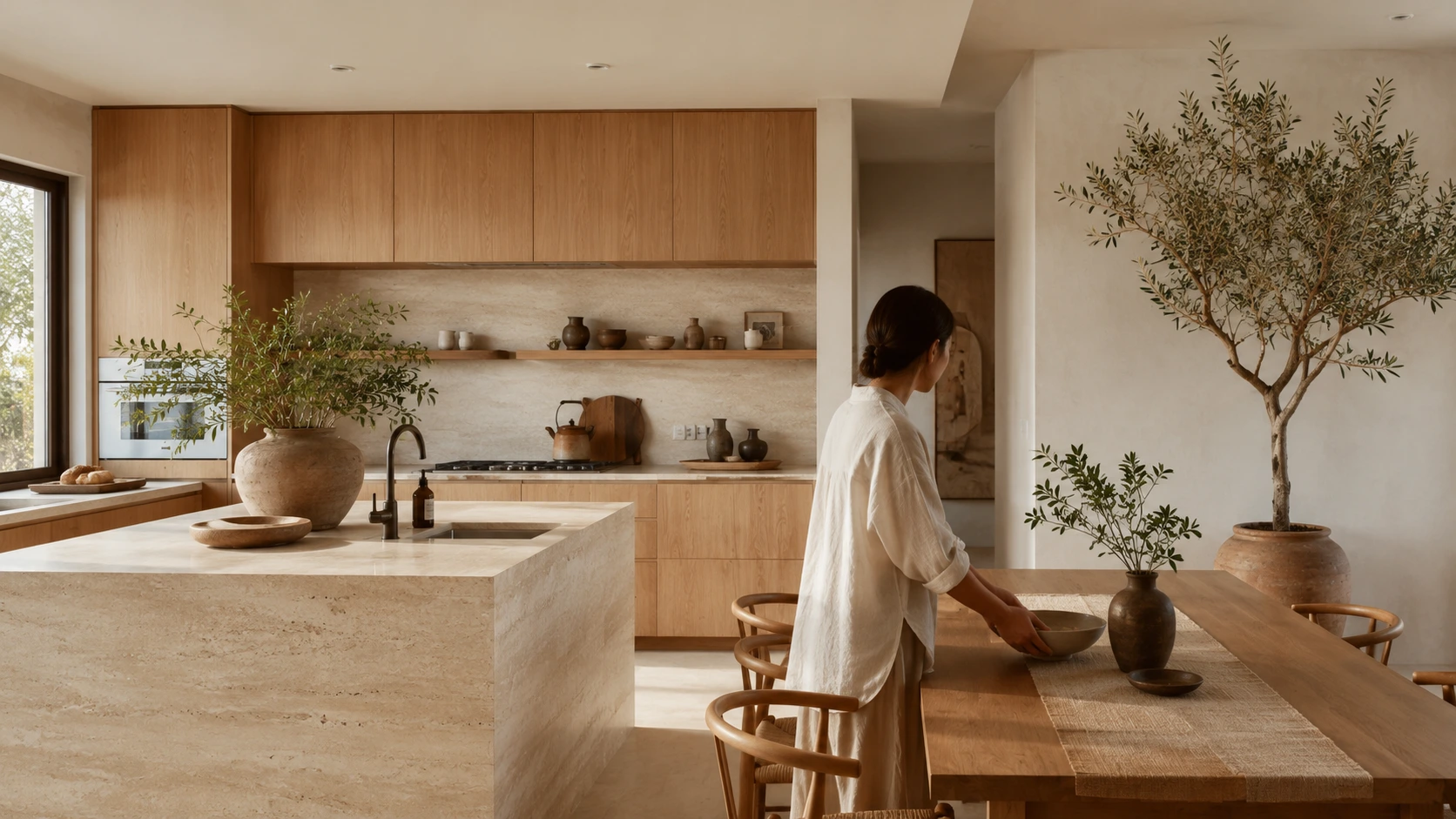
What Japandi actually means Japandi is a mix of two styles that share more than you would think. It blends Japanese minimalism, which values simplicity, craft, and empty space, with Scandinavian design, which values warmth, function, and cozy comfort. Put them together and you get a look that is spare but never cold. In a kitchen that means clean lines, natural materials, a calm color palette, and clear surfaces. The Japanese side keeps it simple and free of clutter. The Scandinavian side keeps it warm and livable with wood, soft light, and texture. A Japandi kitchen design lands in the middle, minimal enough to feel calm and warm enough to feel like a home. This is also why it works so well in a kitchen. A kitchen is a room full of stuff and hard surfaces, and Japandi is built around taming both.
Wood is the heart of the look If there is one thing a Japandi kitchen cannot skip, it is natural wood. Wood brings the warmth that stops minimalism from feeling like a clinic, and it is the single strongest signal of the style. Oak is the classic choice. Its pale, warm tone and visible grain suit Japandi perfectly, and real wood brings a depth and character that a flat printed surface cannot match. Every piece of solid oak looks a little different, and that natural variation is part of the appeal. Here is the honest part, though. Solid oak cabinetry is expensive, and for most people it is the biggest cost in the whole kitchen. You do not have to go all in to get the look.
A solid oak worktop or a single run of oak open shelving gives you real wood where you see and touch it most, for far less than full oak cabinets. Good oak veneer looks close to solid wood on a cabinet door and costs a fraction of the price. If you rent or cannot replace cabinets, add wood through a butcher-block section, a wooden shelf, a chopping board left out, or wooden stools. Real solid oak is genuinely lovely and it lasts for decades, so it can be worth the money if you own your home and plan to stay. But a warm wood tone matters more to the Japandi look than whether every panel is solid oak.
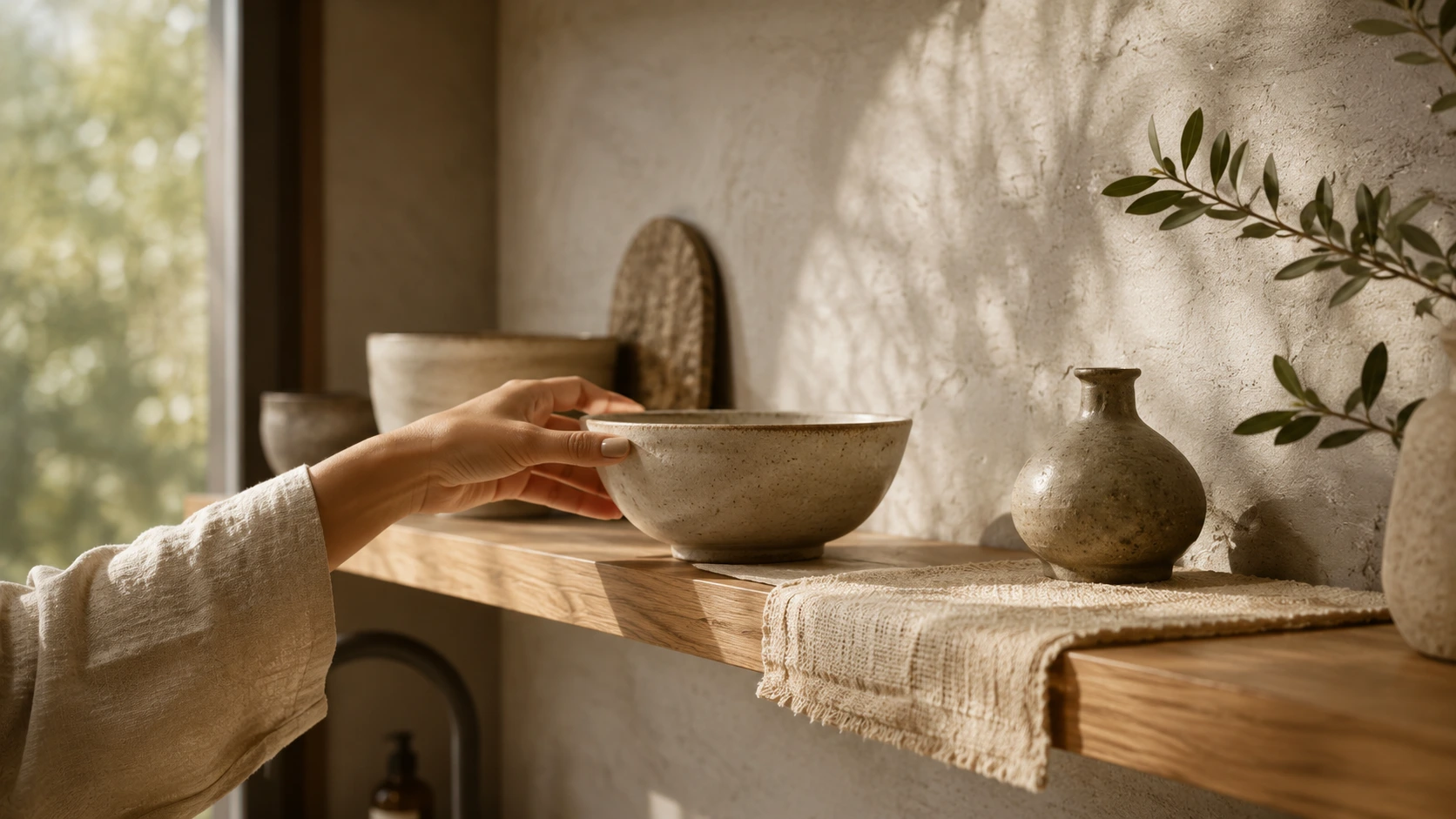
Keep the color palette warm and quiet Color is where a Japandi kitchen either works or drifts into cold minimalism. The palette stays soft, muted, and pulled from nature. Build on warm neutrals. Think cream, oatmeal, soft greige, warm white, and pale wood tones as your base. Then add depth with muted, earthy accents like sage green, clay, charcoal, or black used in small doses on handles, a tap, or a single wall. Avoid bright, glossy colors and stark cool grays, since both fight the calm, warm feeling you are after. You do not need to repaint an entire kitchen to move this way. Warmer wall color, natural wood accents, and neutral accessories carry most of the palette, and those are cheap and renter-friendly.
Clear the clutter, because the style depends on it A Japandi kitchen lives or dies on clear surfaces. The whole calm effect collapses the moment the counter fills with appliances, jars, and mail. This is the least glamorous step and the most important one, and it costs nothing. Clear your counters down to a few things you use daily and store the rest behind closed doors. Give the small appliances a home in a cupboard. Keep out one or two beautiful, useful objects, like a wooden board or a ceramic jug, and put everything else away. Real kitchens get messy, and that is fine. The goal is not a showroom you cannot cook in. The goal is a kitchen that returns to calm and clear once the dishes are done, so build in enough closed storage to make that easy.
Simple fronts, natural textures, soft light Beyond wood and color, a few details do most of the Japandi work. Keep the cabinet fronts flat and simple, with no ornate detail. Handleless or slim, understated handles suit the look best and keep the lines clean. Layer in natural textures to add warmth without adding clutter. Stone or a wood worktop, a linen blind, a woven basket, a stoneware bowl, a single plant. These small, tactile touches are what separate a warm Japandi kitchen from a bare, cold one. Then get the light right. Soft, warm light matters as much here as any material. Swap harsh white bulbs for warm ones, and if you can, add a low pendant or under-cabinet light for a gentle glow in the evening. Natural daylight is best of all, so keep windows clear and simple.
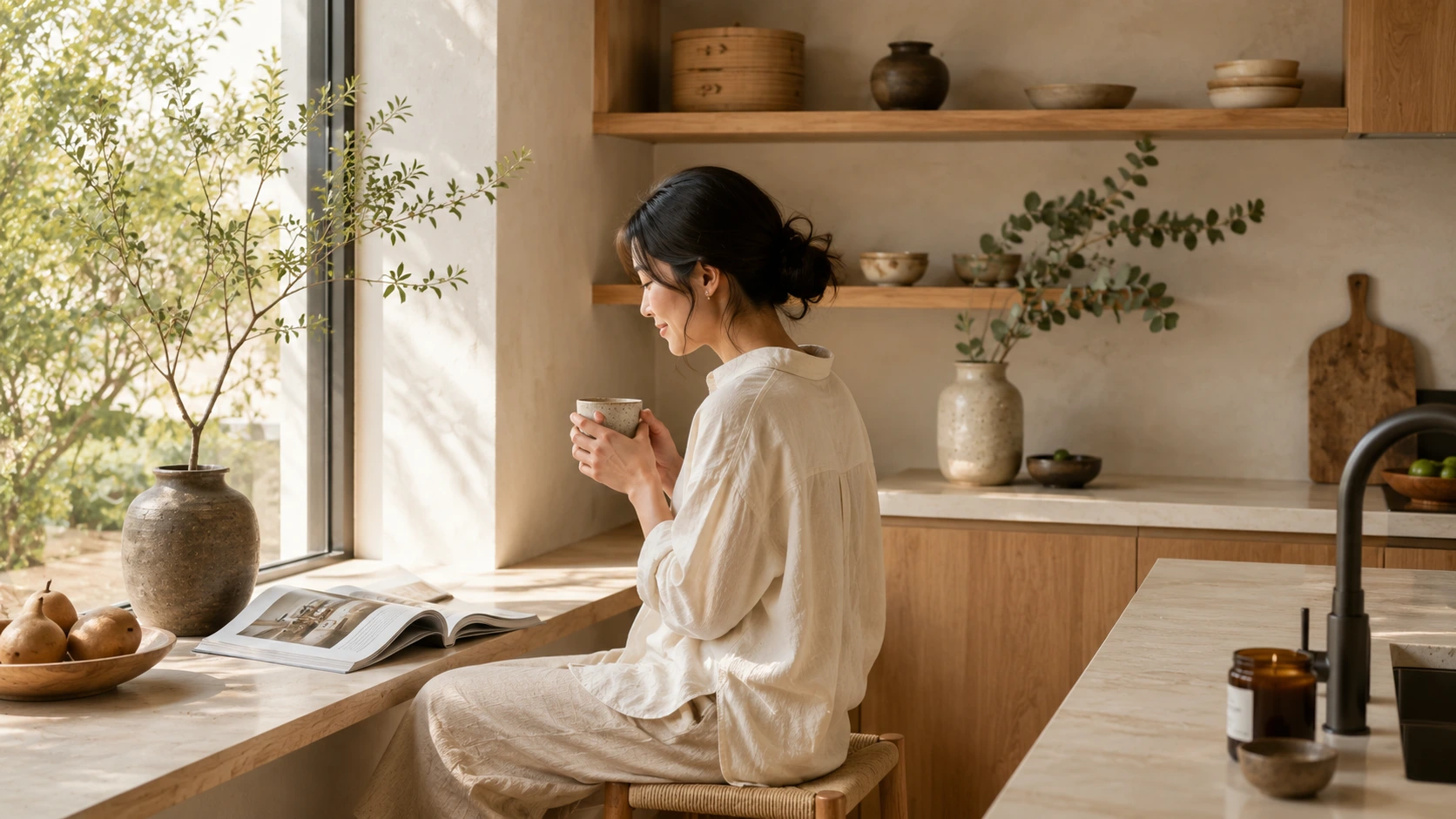
How to get the look on a budget or in a rental You do not need a new kitchen to move toward Japandi. Most of the style comes from color, wood tone, texture, and order, and all of those are cheap or removable.
Declutter and clear the counters first. Free, and it does the most. Paint tired cabinets in a warm neutral if you are allowed, which transforms a kitchen for the cost of a few tins. Swap shiny or ornate handles for simple matte black or wood ones. Add a wood chopping board, a wooden shelf, or a butcher-block offcut for warmth. Bring in linen, stoneware, a woven basket, and one plant for natural texture. Fit warm bulbs and clear the windows for soft, natural light. None of that needs a builder, and a renter can do all of it and take most of it to the next place.
The mistakes that ruin a Japandi kitchen A few things quietly undo the look, and they are easy to avoid once you know them. The most common is going too cold, all white and gray with no wood or warmth, which lands as minimalist and clinical rather than Japandi. The fix is always more warm wood and softer texture. The second is clutter, which cancels the calm no matter how nice the materials are. The third is chasing the perfect showroom photo and feeling like a failure when your real, used kitchen does not match it. It never will, and it does not need to. A Japandi kitchen is meant to be lived in, not photographed empty. If you want one place to start this week, clear every counter in your kitchen down to two or three things and add one wooden object, like a board or a bowl. Live with that clear, warm surface for a few days. You will see how much of the Japandi look was never about money or a renovation. It was about warm wood, a calm palette, and the discipline to keep things simple.
Written by
Sarah BigelowLead Designer & Founder, Bigelow Designs
Sarah Bigelow is the lead designer and founder of Bigelow Designs. With over 15 years of experience in residential interiors, she tests every layout, material, and fixture in real homes before recommending them.
Keep reading
Kitchen inspiration searches are cheap and crowded. Hiring searches cost 30x more and nobody serves them. Plus the NKBA numbers your 10x10 plan has to hit.
10 min read
Most dated kitchens were not ruined by a bad color choice. They were ruined much earlier—when the layout, scale, and materials were chosen for a photograph instead of real life.
6 min read
Kitchen layout guide to plan a space that flows. Learn the work triangle and the best L-shape, U-shape, galley, and island layouts for your room.
7 min read
The Insider Circle
Craving more interior inspiration? Watch our exclusive behind-the-scenes room tours on TikTok and join our Facebook community for daily design secrets.
Join the conversation
Thoughts, questions, or your own experience with this piece? Sign in with your Facebook profile to reply.

