

Kitchen Guides
Kitchen Design: The €35 Searches Nobody Writes About
Kitchen inspiration searches are cheap and crowded. Hiring searches cost 30x more and nobody serves them. Plus the NKBA numbers your 10x10 plan has to hit.
10 min read
Kitchen layout guide to plan a space that flows. Learn the work triangle and the best L-shape, U-shape, galley, and island layouts for your room.

You stand in your kitchen holding a hot pan, looking for somewhere to put it down. The counter is across the room. The bin is behind you. The sink is full. Every meal turns into a small obstacle course.
That is not bad luck. That is a kitchen layout problem. A good kitchen layout puts the things you use near each other so you stop walking in circles. This guide shows you how to plan a layout that fits your room and the way you cook, whether you are remodeling, moving in, or just trying to make a frustrating kitchen work better.
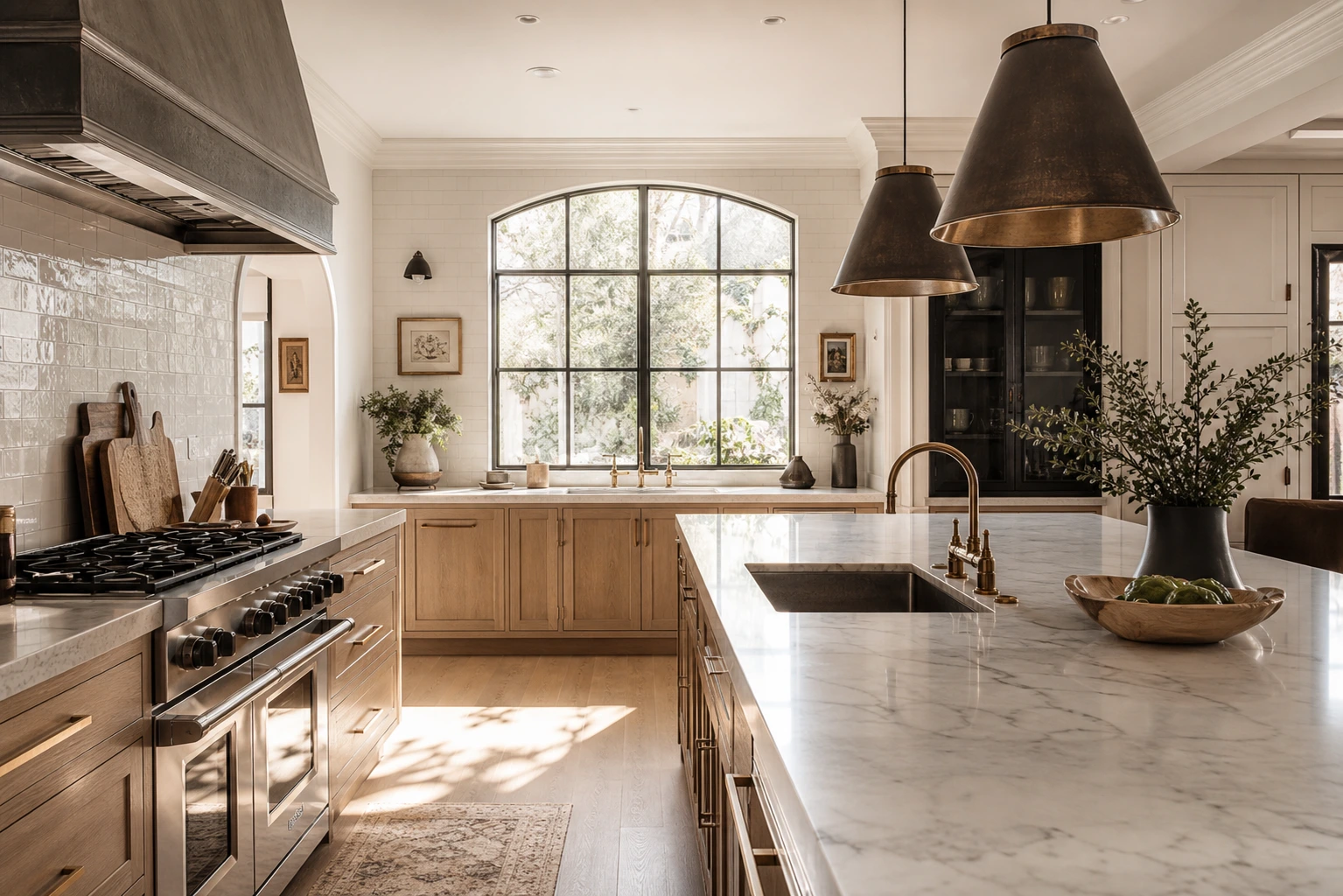
Good kitchen layout means the room follows your movements. You cook in a simple flow: grab food, prep it, cook it, clean up. A smart layout lines those steps up so each one sits a step away from the last.
You do not need a huge kitchen for this. You need the right plan for the space you have. Most kitchen frustration comes from a bad flow, not a small size. Fix the flow and even a tight kitchen feels easy.
Keep these basics in mind:
Designers use one simple idea to plan a kitchen layout: the work triangle. The triangle connects your three busiest spots, which are the fridge, the sink, and the stove. You move between them constantly while you cook.
The goal is a triangle that is easy to move around:
You do not need to measure with a ruler. Just look at your kitchen and ask one question. When you cook, do you take long walks between the fridge, sink, and stove? If yes, your triangle is stretched, and that is your first thing to fix.
Your room shape points you to the right kitchen layout. Work with the shape you have instead of fighting it.
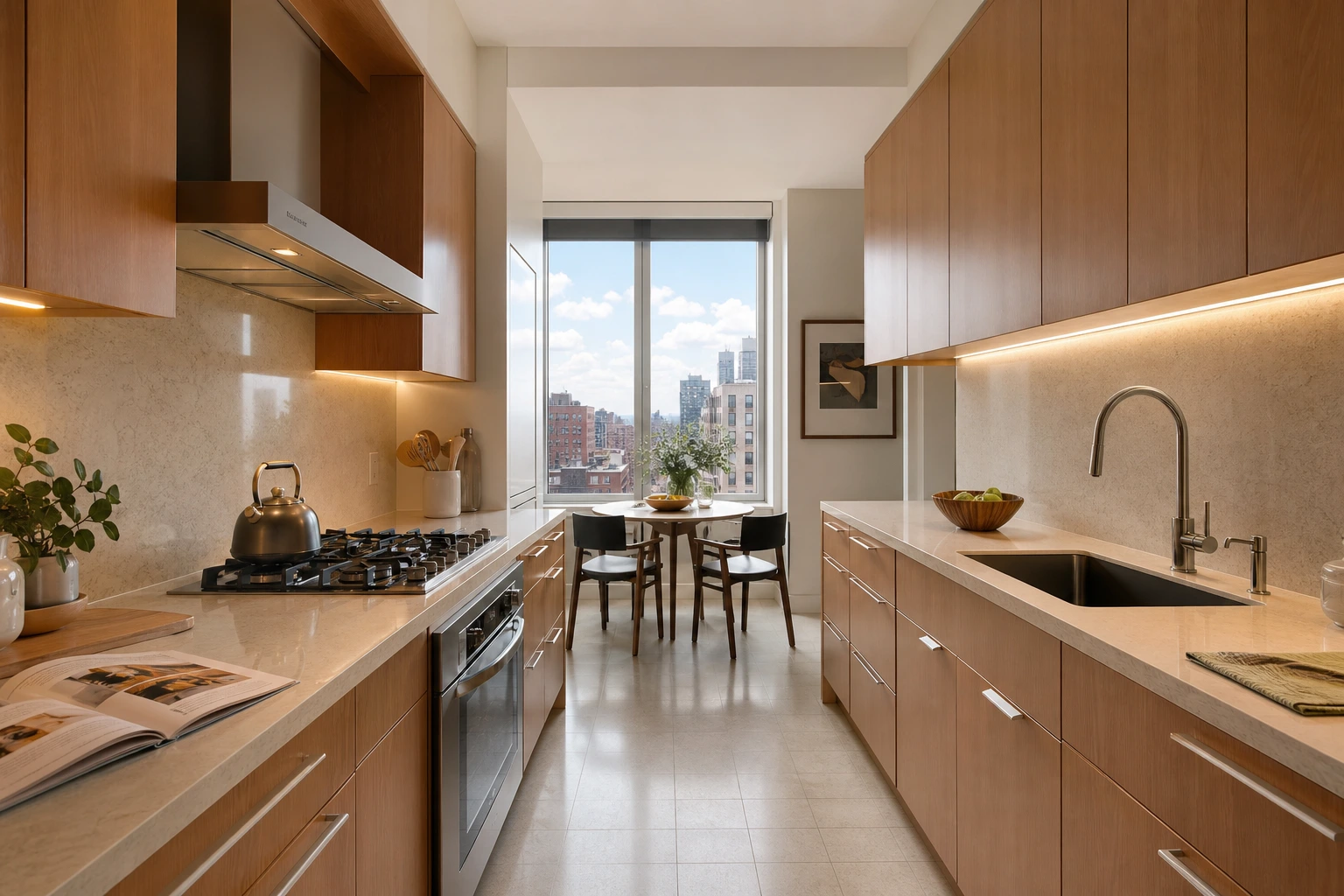
A galley kitchen has two counters facing each other with a walkway between. It is common in apartments and it works well, because your triangle stays tight.
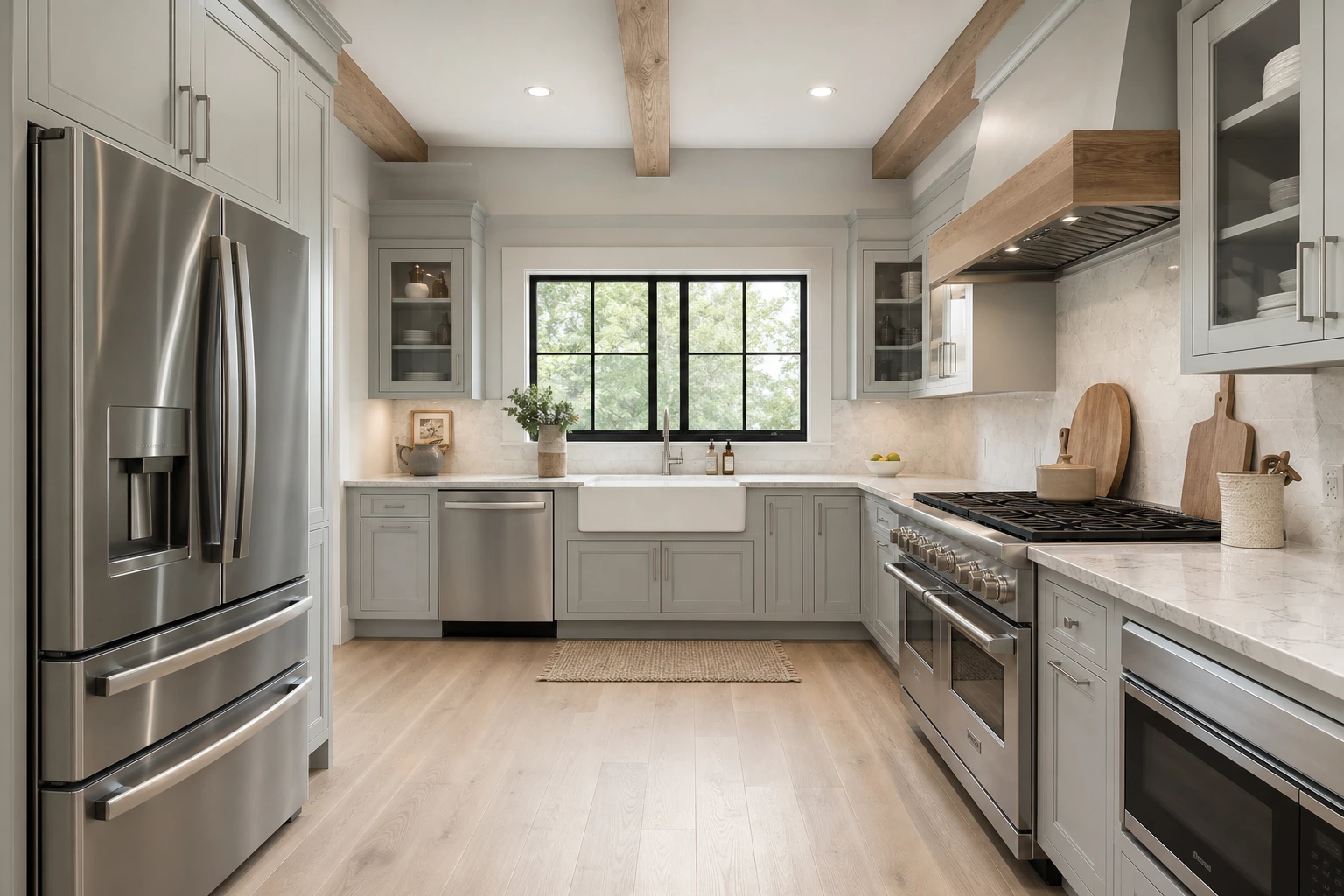
An L-shaped kitchen uses two walls that meet in a corner. It gives you a natural, open flow and room for a small table.
A U-shaped kitchen wraps counters around three walls. It gives you the most counter and storage space, which suits people who cook a lot.
A one-wall kitchen lines everything up against a single wall. You find it in studios and small apartments.
Lots of people search for a kitchen design with an island, and an island can be great. It adds counter space, storage, and a spot to sit. But an island only works if you have the room for it.
Be honest about your space before you commit:
An island in an L-shaped or U-shaped kitchen with real open space is a strong move. An island crammed into a small kitchen is a daily headache.
You can plan a kitchen layout without hiring anyone. Work through these steps in order.
Say your kitchen feels chaotic but you cannot move the plumbing. You start by clearing the paths between your three points. You move the bin out of the walkway. You shift your prep tools into the drawer nearest the counter and your pots into the cabinet by the stove. You add a small rolling cart for extra surface near the busiest spot.
Nothing structural changed. Your plumbing and stove stayed put. But your flow is now tight and clear, and cooking feels calmer. That is most of what a good kitchen layout gives you, for almost no money.
Do not redraw your whole kitchen. Just cook one normal meal and pay attention to where you get stuck. Maybe you cross the room for a pan. Maybe the bin blocks the sink. Find the single worst pinch point.
Then fix that one thing. Move the bin. Shift the pots closer to the stove. Clear the path you use most. Live with that change for a few days and feel the difference. A good kitchen layout is just a series of small fixes like this, each one putting what you need a step closer to your hand.
Written by
Sarah BigelowLead Designer & Founder, Bigelow Designs
Sarah Bigelow is the lead designer and founder of Bigelow Designs. With over 15 years of experience in residential interiors, she tests every layout, material, and fixture in real homes before recommending them.
Keep reading
Kitchen inspiration searches are cheap and crowded. Hiring searches cost 30x more and nobody serves them. Plus the NKBA numbers your 10x10 plan has to hit.
10 min read
Most dated kitchens were not ruined by a bad color choice. They were ruined much earlier—when the layout, scale, and materials were chosen for a photograph instead of real life.
6 min read
Japandi kitchens look expensive and unreachable. They aren't. Here's how to get the warm, calm, clutter-free look on any budget, even if you rent.
7 min read
The Insider Circle
Craving more interior inspiration? Watch our exclusive behind-the-scenes room tours on TikTok and join our Facebook community for daily design secrets.
Join the conversation
Thoughts, questions, or your own experience with this piece? Sign in with your Facebook profile to reply.

