When a living room feels unfinished, our initial reflex is usually to go shopping for small accessories: another scented candle, a ceramic catchall, or a stack of trendy coffee-table books. Yet, after placing them around the room and stepping back, the space often feels just as disconnected as before—only now more cluttered.
A living room that feels truly resolved and inviting is rarely built on decorative knick-knacks. Instead, it comes down to foundational relationships: scale, visual weight, lighting hierarchy, and tactile balance. When these core elements are in harmony, even modest furniture looks intentional and bespoke.
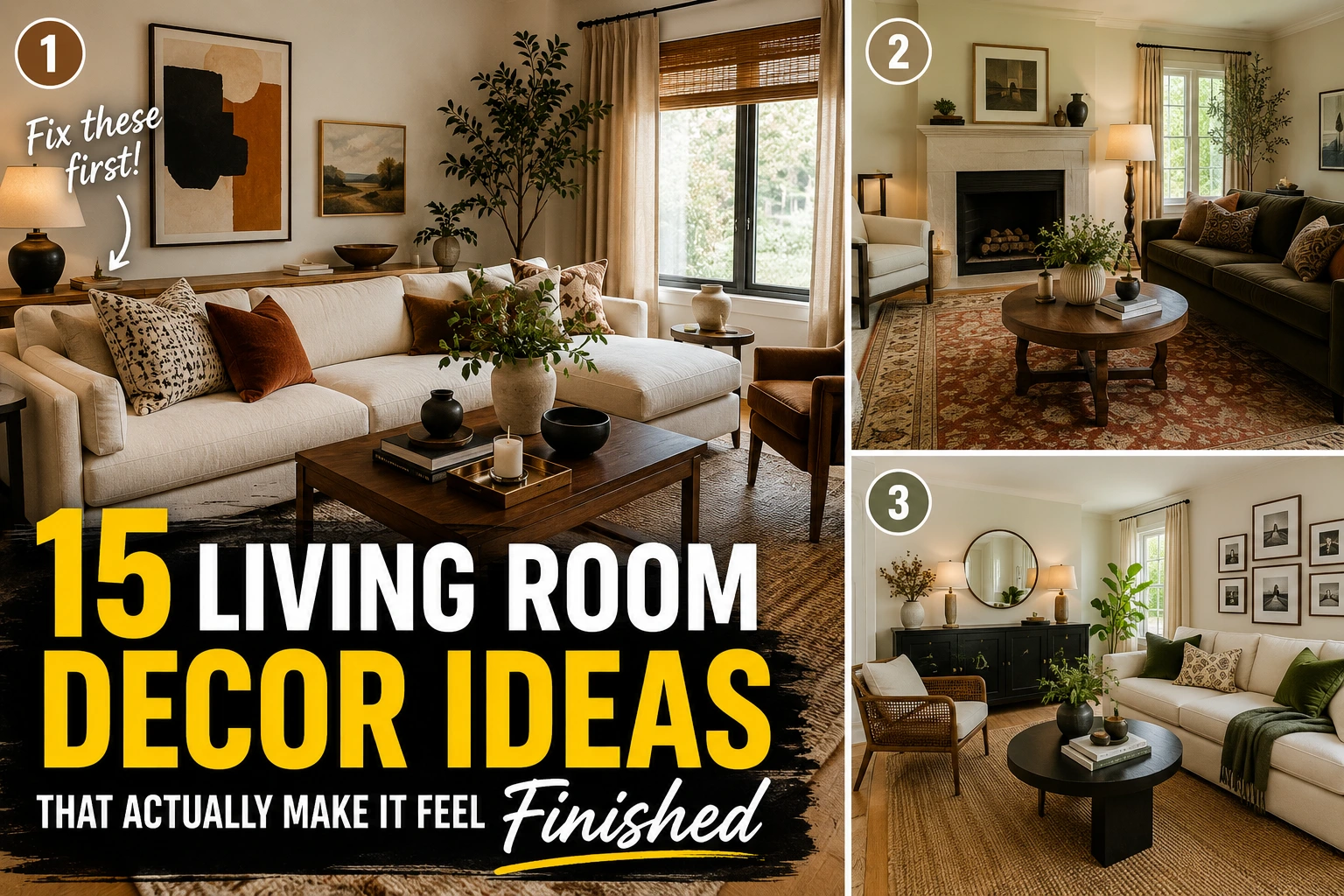
Here are 15 designer-tested home decor ideas to turn an unfinished living room into a cohesive, polished sanctuary without starting from scratch.
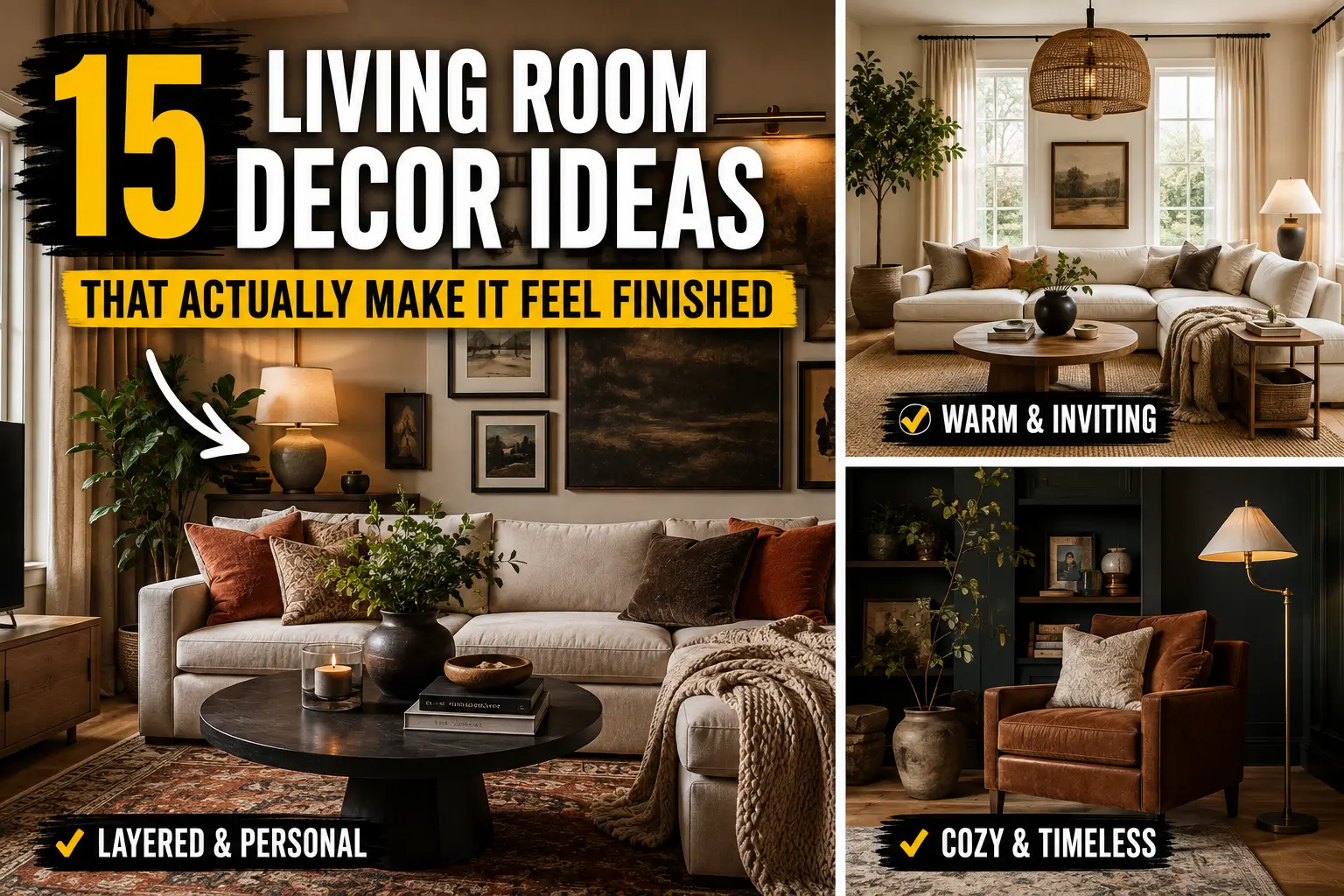
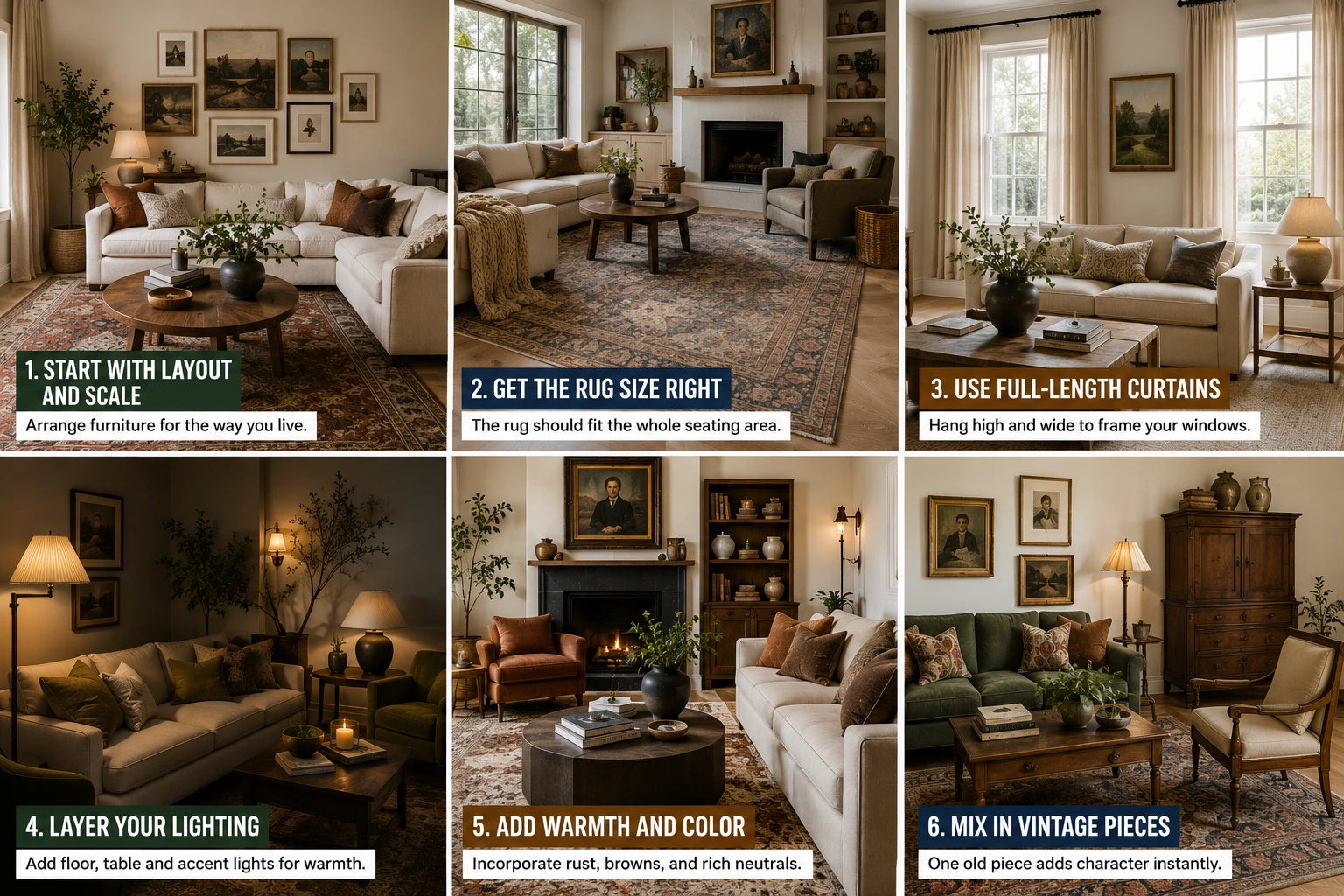
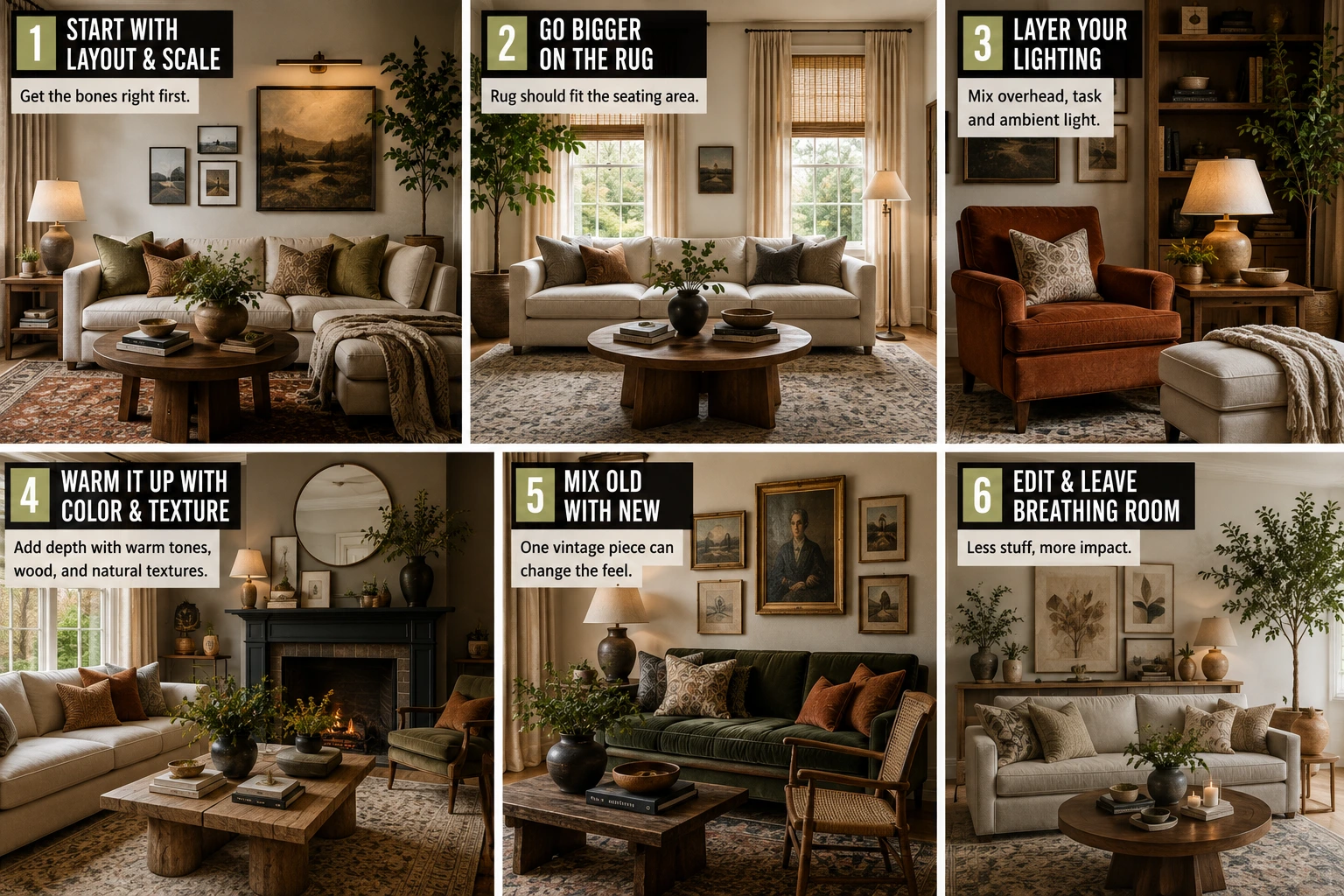
An undersized area rug is the single most common reason living rooms feel fragmented. When a small 5x7 rug floats alone in the center of the room, it pulls the eye downward and makes the entire floor plan feel cramped and disjointed.
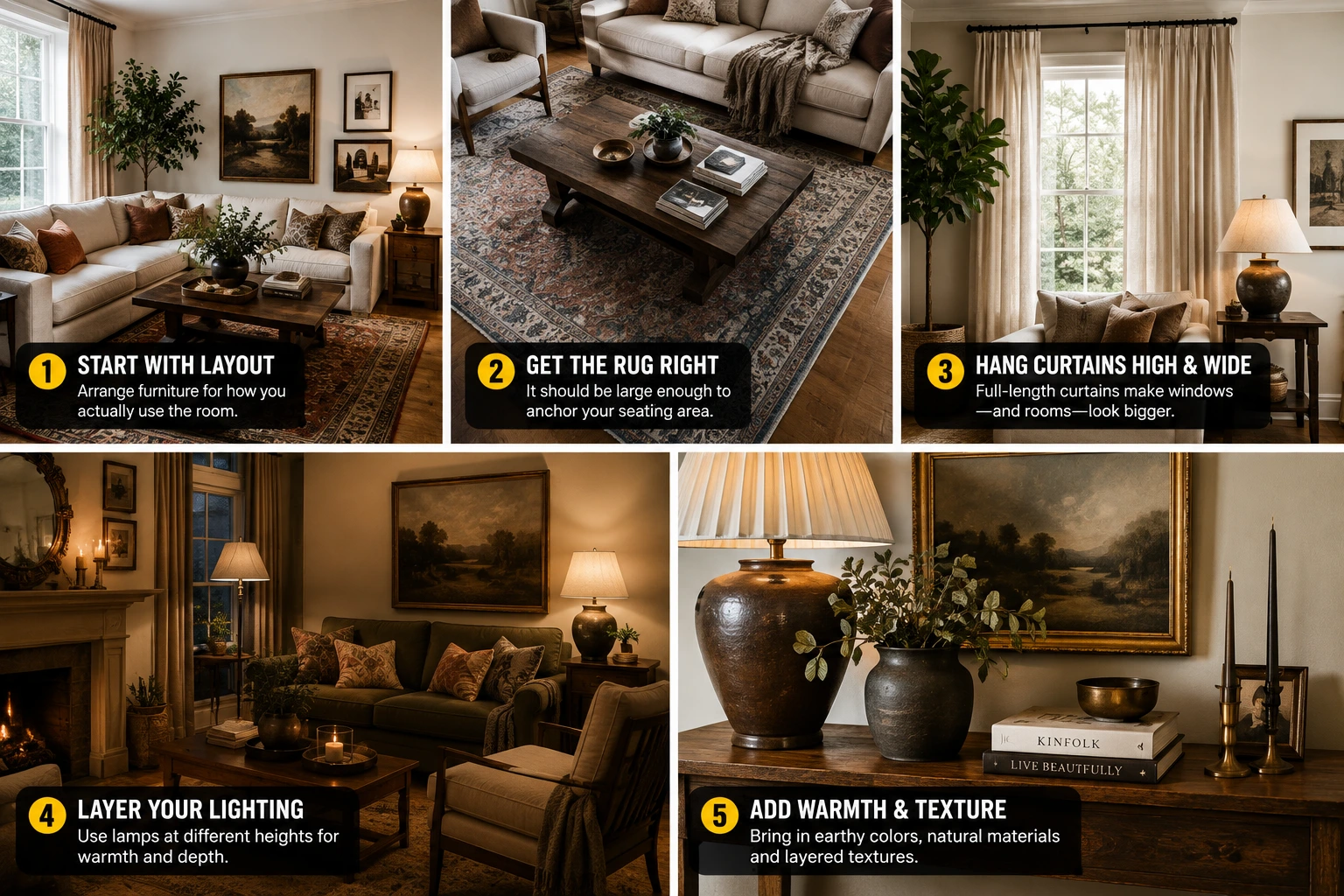
For a space to feel grounded, your rug must connect the furniture rather than sit isolated beneath the coffee table.
- The Front-Legs Rule: As a minimum standard, the front legs of your sofa and accent chairs should sit firmly on the rug by at least 6 to 8 inches.
- Room Proportions: In most standard American living rooms, an 8×10 or 9×12 rug provides the necessary footprint. Leave 12 to 18 inches of bare floor between the rug edge and the perimeter walls.
Design Studio Resource
Eliminate rug placement guesswork. Calculate clearances, seating boundaries, and perfect proportions with our interactive Living Room Rug & Scale Calculator.
Pushing every sofa and armchair flat against the walls does not make a room look bigger; it makes it feel like an empty waiting hall. Conversation stalls when seating is spread too far apart.
Pull your seating inward by even 6 to 12 inches. Floating the sofa creates breathability around the perimeter, establishes clear walking circulation paths (aim for 30 to 36 inches of walkway clearance), and pulls people into an intimate conversation circle.
Standard window treatments often truncate a room when hung directly above the window casing. To make standard 8-foot or 9-foot ceilings feel lofty and expansive, mount your curtain rods close to the ceiling line.
- Mounting Height: Position the drapery rod 4 to 6 inches above the window frame or 2 inches below crown moulding.
- Rod Extension: Extend the rod 8 to 12 inches beyond the window casing on each side. This allows the curtain panels to stack on the wall when opened, flooding the room with natural daylight without obscuring glass.
- Length: Ensure drapes lightly kiss the floor or break with a 0.5-inch puddle. Avoid curtains that hover awkwardly above baseboards.
Single ceiling fixtures cast harsh, unflattering downward shadows that flatten textures. A cozy, high-end living room relies on three distinct layers of illumination working together:
- Ambient Lighting: Soft, diffused background glow (e.g., dimmable recessed lighting, flush mounts, or cove lighting).
- Task Lighting: Directed illumination for activities (e.g., an articulated reading floor lamp beside an armchair).
- Accent Lighting: Decorative accentuation (e.g., picture lights over wall art, cordless ceramic table lamps on consoles, or uplights on indoor trees).
The Kelvin Rule: Always install 2700K (warm white) LED bulbs with a 90+ CRI (Color Rendering Index) across all fixtures. This eliminates the sterile blue glare of standard daylight bulbs.
A common living room decor pitfall is scattering multiple small 8x10 picture frames across a large empty drywall surface. This creates visual static and leaves the room feeling unresolved.
Instead, invest in one significant focal point. A single oversized framed canvas or architectural photograph spanning two-thirds the width of your sofa creates instant confidence and serenity.
- Eye-Level Hanging Standard: Hang artwork so the vertical center of the piece sits 57 to 60 inches from the finished floor.
- Above Furniture: If mounting above a sofa or credenza, leave a 6 to 8 inch clearance between the top of the furniture cushion and the bottom edge of the frame.
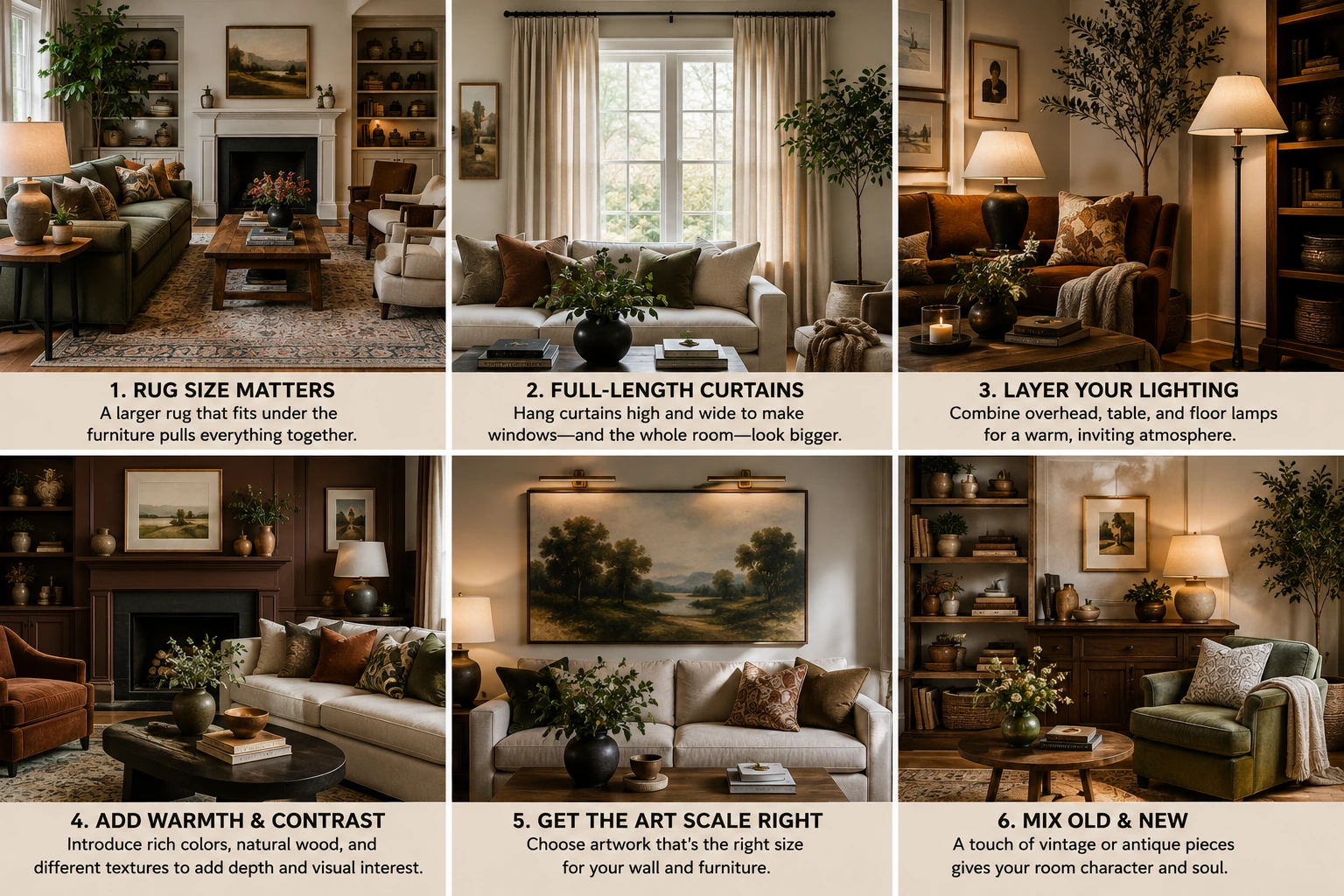
High-contrast palettes (such as stark white paired with jet black) can feel sterile in everyday living areas. Creating warmth requires shifting toward nuanced earthy neutrals: terracotta, camel, warm olive, saddle leather, mushroom, and oatmeal.
| Element | Recommended Tones | Material Selection |
|---|
| Primary Seating | Oatmeal, Taupe, Warm Ecru | Heavy Belgian Linen, Bouclé, Velvet |
| Casegoods & Tables | Caramel Walnut, Bleached Oak | Solid Hardwood, Travertine, Honed Banswara Marble |
| Textiles & Throws | Rust, Terracotta, Olive Green | Alpaca Wool, Washed Waffle Cotton |
| Metals & Accents | Unlacquered Brass, Oil-Rubbed Bronze | Cast Iron, Aged Brushed Brass |
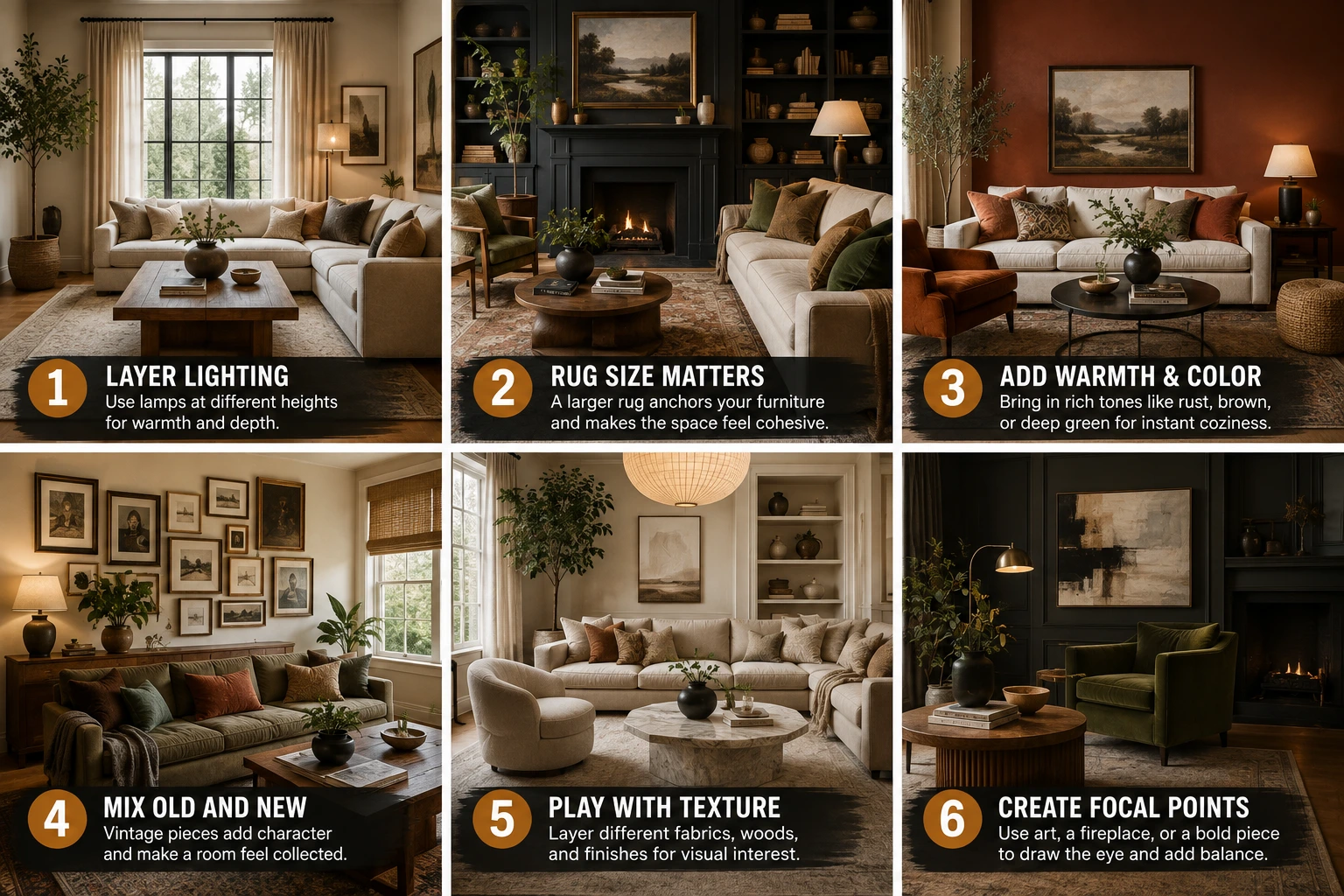
Showrooms sell matched matching sets: identical sofas, loveseats, end tables, and coffee tables. While easy to purchase, matching suites strip a living room of soul and personality.
A sophisticated room feels collected over time. Pair a clean-lined modern low-slung sofa with a vintage mid-century walnut side chair, or contrast an industrial steel coffee table with a weathered antique ceramic vessel. This tension between old and new gives the space character and longevity.
Most modern living rooms are dominated by right angles: rectangular sofas, rectangular coffee tables, rectangular rugs, and flat-screen TV boxes. Without curves, the space feels boxy and rigid.
Break up straight lines by introducing organic shapes:
- A round or oval coffee table in travertine or burl wood.
- Curved barrel accent chairs that soften circulation paths.
- Arched floor lamps or freeform asymmetrical mirrors.
Over-accessorizing a sofa with 8 matching throw pillows makes sitting down uncomfortable and looks stiff. Instead, practice restraint with the 2:1 Pillow Formula:
- Place two large base pillows (22×22 inches) in a solid textured linen or wool on the outer corners.
- Layer one smaller patterned or tonal pillow (20×20 inches or 14×20 lumbar) in front.
- Always use high-fill feather-down inserts sized 2 inches larger than the pillow cover (e.g., a 24×24 insert inside a 22×22 cover) for a plump, luxurious drape.
Tiny succulents scattered on every shelf create clutter. Instead, introduce life through one or two architectural floor plants:
- An 8-foot Fiddle Leaf Fig, Olive Tree, or Bird of Paradise placed in a textured clay or terracotta planter.
- If lighting is limited, use oversized botanical cuttings (such as long olive branches or magnolia stems) in a heavy stoneware vase on the console table.
The black rectangle of a large television often dominates the primary wall. To maintain design harmony:
- Consider an art-frame television set with a matte display that showcases classical oil paintings or photography in ambient mode.
- Anchor the TV over an extra-wide credenza (the console should be at least 1.5 times wider than the TV screen) to keep proportions grounded.
- Build a curated gallery wall or flanking bookcase arrangement around the display to balance visual weight.
If your living room has an underutilized corner or niche, give it a dedicated functional purpose rather than leaving it empty:
- Anchor a comfortable lounge chair with a dedicated task lamp and a drink table to create an inviting reading corner.
- Style a small marble console or vintage bar cart with glassware, an ice bucket, and a table lamp to create an effortless entertaining station.
If you prefer a calm, monochromatic room, tactile texture must take the place of loud colors to prevent the room from feeling cold.
Combine at least four distinct materials within the same seating zone:
- Chunky Bouclé or Ribbed Corduroy on accent seating.
- Matte Linen on drapery and primary upholstery.
- Porous Travertine or Fluted Wood on coffee tables and consoles.
- Natural Hide or High-Pile Wool underfoot.
When styling flat surfaces, keep the composition functional and breathable:
- Divide your coffee table into thirds using an oversized shallow tray, a stack of two large art monographs topped with a candle or brass match striker, and an organic ceramic vase with fresh botanicals.
- Vary the heights of the three clusters so the eye naturally glides across the arrangement.
A living room's perceived luxury extends beyond sight and touch. Thoughtful ambient sensory details complete the experience:
- Choose signature scents based on cedarwood, amber, fig, or hinoki wood through clean-burning soy candles or reed diffusers.
- Add felt furniture pads beneath all chair and table legs to preserve hardwood floors and prevent grating friction when furniture shifts.
Keep these standard architectural measurements on hand when planning your room layout:
| Element / Clearance | Recommended Dimension | Design Rationale |
|---|
| Coffee Table to Sofa Clearance | 14 – 18 inches | Close enough to reach drinks; wide enough for comfortable legroom |
| Main Walking Pathways | 30 – 36 inches | Prevents bottlenecks and allows unobstructed movement |
| Coffee Table Height | 1 – 2 inches below sofa seat | Keeps sightlines open and feels natural when lounging |
| Artwork Centerline | 57 – 60 inches from floor | Standard museum eye-level viewing height |
| Curtain Rod Clearance | 4 – 6 inches above window frame | Draws the eye up and creates the illusion of higher ceilings |
| Lighting Color Temperature | 2700K (Warm White) | Warm, relaxing ambiance for residential living zones |


