

Design Trends
Warm Minimalism Interior Design: Current 2026 Standards
Warm minimalism interior design requires 55 to 75 LRV paints, 2700K lighting, and 0.80 NRC acoustics. Master tactile palettes and architectural reduction.
8 min read
Discover the biggest autumn/winter 2026 decorating trends, from chocolate brown and burgundy to vintage furniture, maximalism, wallpaper and tactile texture.

From chocolate brown and burgundy to collected antiques, statement wallpaper and unapologetic pattern, autumn/winter 2026 is shaping up to be the season we finally stop decorating our homes for everyone else.
For several years, the dominant decorating conversation revolved around restraint. Quiet luxury, soft neutrals, pared-back rooms and carefully controlled palettes offered an appealing sense of calm.
Autumn/winter 2026 is not exactly rejecting that idea. But it is loosening its grip.
Across designer surveys, search data, new-season collections and industry forecasts, a remarkably consistent theme is emerging: homes are becoming more individual, more layered and considerably less interested in looking anonymous.
The American Society of Interior Designers' 2026 Trends Outlook describes a wider move from restraint towards boldness and individuality, including saturated colour and more visible personality. Meanwhile, 1stDibs' ninth annual designer survey found maximalism and eclecticism among the styles designers expect to remain particularly prominent in 2026.
And the shift is now filtering directly into autumn collections. An early look across John Lewis, Habitat, Very and Dunelm's autumn 2026 ranges identified burgundy, rust, caramel, dark green, light blue and yellow appearing repeatedly, alongside pattern, mid-century references and richer finishes.
So, while there are plenty of individual trends worth knowing, the real autumn/winter 2026 decorating story is bigger than any particular paint colour or sofa shape.
Personality is becoming the trend.
The key decorating trends emerging for autumn/winter 2026 are:
What connects them is the move towards homes that look collected rather than prescribed.
Here is how each trend is taking shape.
Perhaps the easiest autumn/winter 2026 shift to spot is colour.
Chocolate brown remains particularly important. In 1stDibs' survey of 468 design professionals, 33% identified chocolate brown as a leading colour for 2026, while designers broadly anticipated earthy and dramatic browns, greens and reds.
More recent retail evidence suggests those deeper shades are carrying straight into autumn. Ideal Home's July preview of AW26 collections highlighted recurring appearances of burgundy, rust, caramel, dark green, yellow and light blue across several major UK retailers.
Houzz search behaviour points in a similar direction. Its May 2026 Emerging Summer Trends Report recorded substantial increases in searches for "rust colors" and "chocolate brown", alongside continued interest in sage, taupe, cream and mushroom shades.
The important part is not that neutrals have suddenly disappeared. They haven't.
Instead, neutrals are becoming warmer and are increasingly being used alongside shades that give a room greater depth.
Think chocolate brown with pale blue. Burgundy with warm timber. Rust beside butter yellow. Forest green against cream.
Autumn colour is beginning to feel less formulaic.
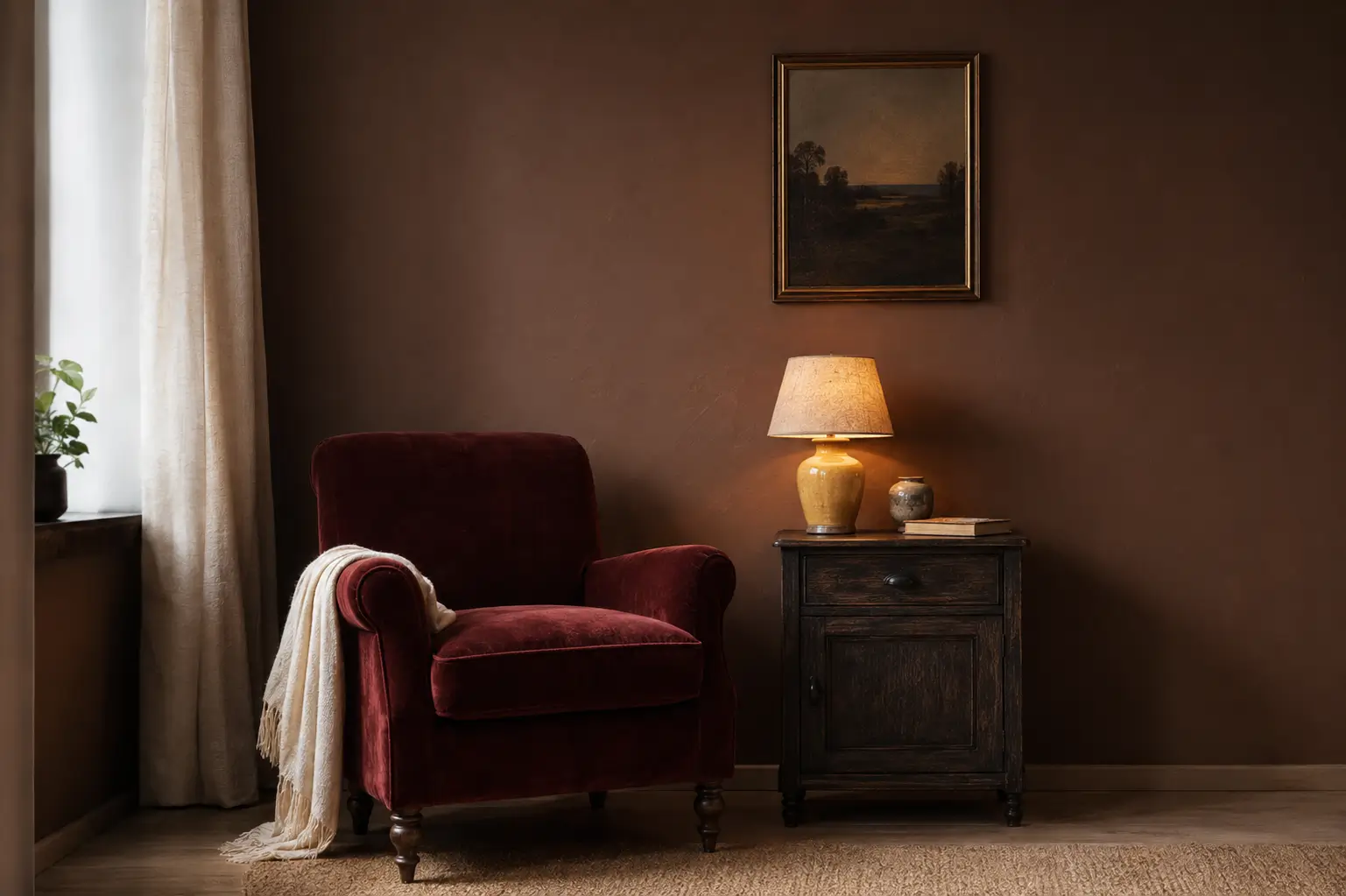
You do not need to repaint an entire room. Start with one darker anchor: a lacquered side table, velvet chair, painted cabinet or large rug. Then repeat that colour once or twice elsewhere so it feels intentional rather than accidental. The goal is richness, not heaviness.
Maximalism is undoubtedly part of the 2026 story, but calling the trend simply "more is more" misses what has changed.
In the 1stDibs survey, 39% of participating designers identified maximalism as a style expected to remain popular in 2026, while 38% selected eclecticism. Designer Brittany Giannone described contemporary maximalism to 1stDibs as layering that creates warmth, depth and a personal narrative rather than accumulating things purely for abundance.
That distinction matters.
The newest maximalist rooms are less interested in filling every available inch. They are interested in putting meaningful things together.
A striped chair might sit beside an antique table. Contemporary art might hang over traditional wallpaper. A modern sofa might share the room with inherited ceramics, travel finds and books accumulated over years.
It is maximalism with an editor.
And for anyone who has spent the past decade worrying that the woods in a room must match, or that every object should belong to the same design era, this is rather liberating.
Closely related to maximalism is one of the most useful ideas emerging this year: the collected home.
Rather than furnishing a room as one complete look, the approach encourages spaces to evolve gradually.
There is meaningful evidence behind the growing appetite for older pieces. According to 1stDibs, an average of 36% of items sourced by surveyed designers for projects in 2025 were vintage or antique, the highest proportion the company had recorded since 2021. Eighty-five per cent of respondents had sourced vintage pieces, while the reported use of pre-1920 antiques also increased.
Contemporary design coverage is reflecting the same shift. House Beautiful's July 2026 coverage of the "collected home" emphasised mixing textures, warmer tones and vintage-inspired pieces rather than creating rooms that appear to have been purchased all at once.
It makes sense as an autumn trend because a collected room naturally creates warmth.
Old timber, worn leather, aged brass, vintage textiles, ceramic lamps and framed artwork introduce something a perfectly coordinated new furniture set struggles to reproduce: history.
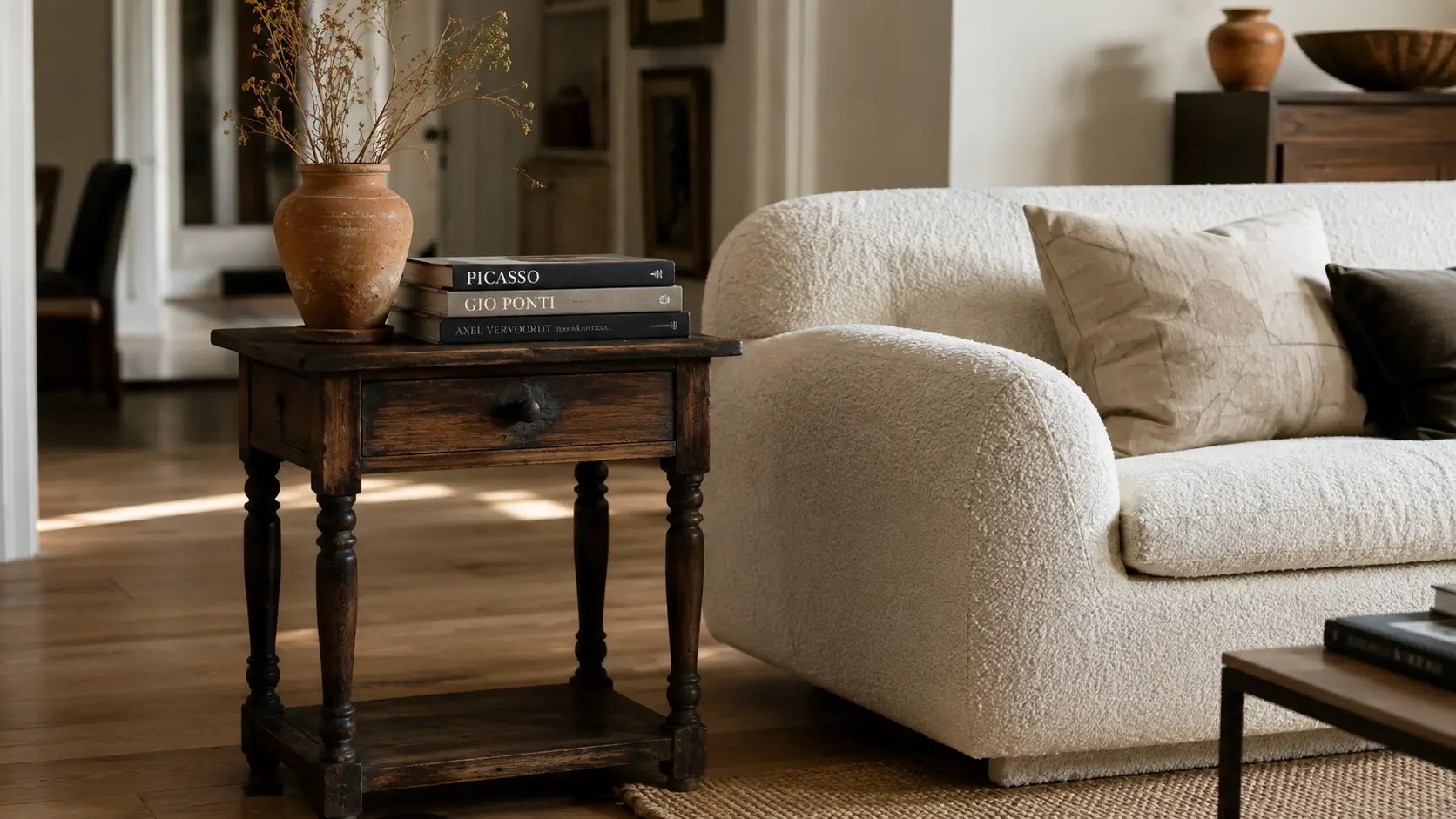
Do not try to make something look vintage. Use something that actually has age, character or meaning whenever possible. One genuine old table beside a contemporary sofa will often create more personality than a whole room of reproduction "heritage" furniture.
Wallpaper never really disappeared, but autumn/winter 2026 looks set to make it much harder to ignore.
The 1stDibs designer survey found strong enthusiasm for wallpaper, including using it across whole rooms and extending it onto ceilings.
That reflects a wider rejection of the idea that patterned surfaces need to be confined to one cautious "feature wall".
Floral papers, stripes, heritage motifs and scenic designs all fit neatly into the more expressive mood of the year.
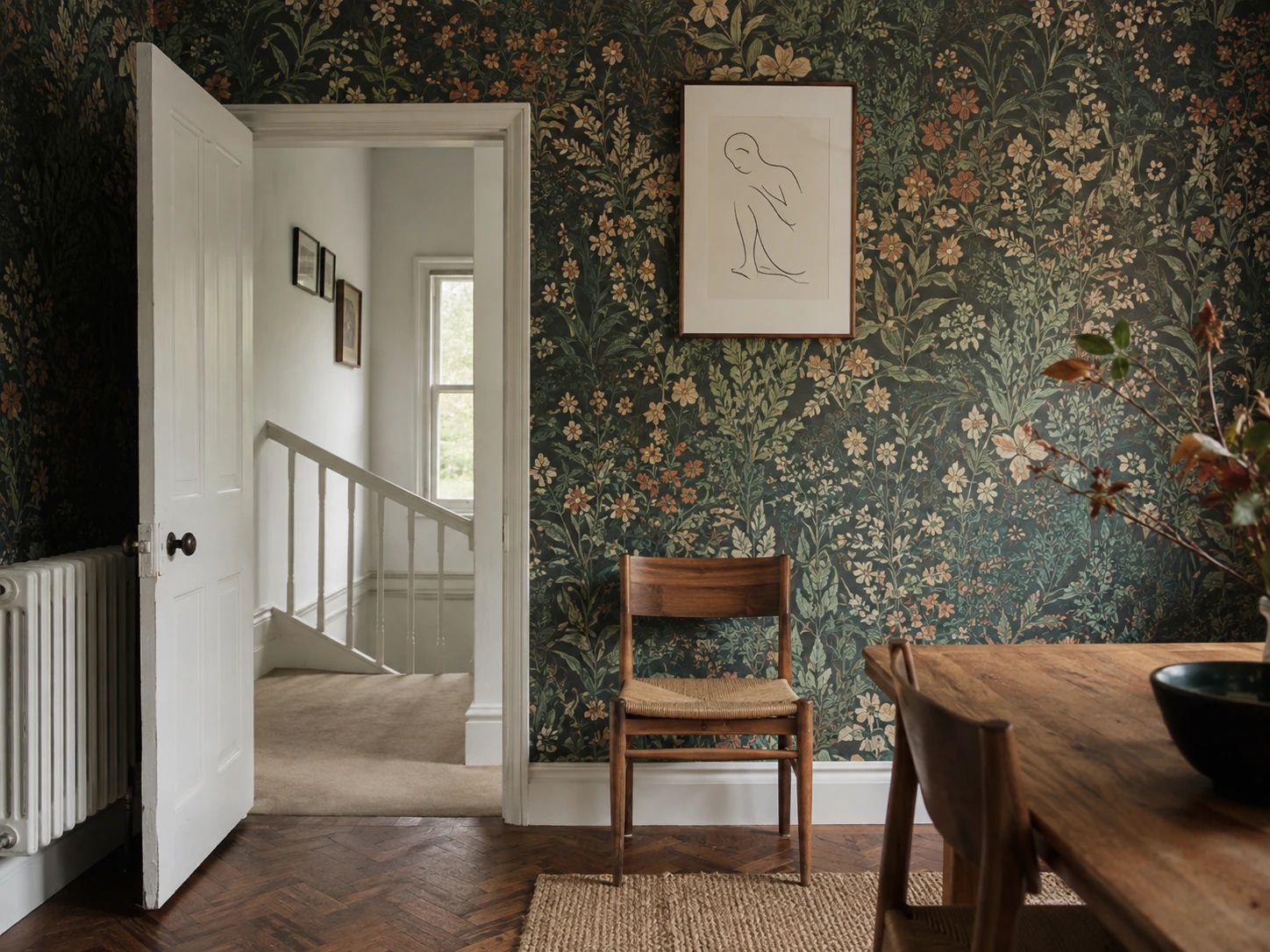
And there is a reason wallpaper works so well with this season's other trends. It immediately adds colour, pattern and a feeling of history, making even relatively simple furniture feel more intentional.
The most contemporary approach is often surprisingly traditional: rather than treating wallpaper as the room's single statement, let it form the backdrop and continue layering.
Patterned cushions need not disappear because the walls are patterned.
They simply need to talk to one another.
Not every personality-filled interior needs to be brightly coloured.
For quieter homes, texture may be the more important autumn/winter 2026 tool.
Houzz's 2026 search analysis points towards growing interest in tactile and characterful surfaces, including scalloped tile, terracotta flooring, limewash and wainscoting. The platform described the broader direction as a movement towards sensory-rich, personal spaces.
That means plaster that shows movement. Wood with visible grain. Nubby upholstery. Woven lampshades. Handmade tiles where every surface is slightly different.
The result is not necessarily maximalist visually, but it achieves the same objective: a room that does not feel generic.
This is particularly useful when decorating with beige, cream or brown. A neutral scheme containing wool, timber, stone, linen, ceramic and aged metal can be far more interesting than a colourful room containing several flat, synthetic surfaces.
Texture gives restraint a personality of its own.
Another defining AW26 idea is the return of things we were once told were dated.
Traditional furniture. Skirted upholstery. China cabinets. Decorative trims. Florals. Dark timber. Old-fashioned lighting.
Even the vocabulary is becoming playful. House Beautiful recently described the emerging "granny cool" aesthetic as an evolution of cottagecore, combining antiques and craftsmanship with richer colours, stronger pattern and more sculptural elements.
Homes & Gardens has similarly highlighted renewed interest in nostalgic elements such as coloured glassware, china cabinets and wainscoting, connecting their appeal to the desire for rooms with personality and history.
But this is not a faithful recreation of your grandmother's sitting room.
The appeal lies in taking recognisable elements and disrupting them.
A traditional floral sofa can sit beneath contemporary art. A mahogany cabinet can work in a room painted pale blue. Chintz might be paired with chrome.
Once again, the common denominator is not a fixed aesthetic.
It is permission to mix.
There is another, subtler way interiors are becoming more characterful: shape.
Curves have been gaining ground for several seasons, but current Houzz search data suggests the idea is expanding beyond rounded sofas and chairs into architectural details.
Between the comparable search periods used in Houzz's 2026 report, interest in scalloped tile more than tripled and searches for wave tile also increased.
Scalloped edges, wavy mirrors, rounded tables and softly irregular objects make rooms feel less rigid.
They are particularly effective against more traditional autumn materials such as dark timber and heavy textiles, because the contrast stops everything feeling overly formal.
There is something inherently personal about an object with an unusual silhouette.
It looks chosen rather than default.
Perhaps the most refreshing 2026 development is that interiors are becoming slightly less serious.
Pinterest's 2026 Predicts report offers one of the clearest examples. Its "FunHaus" forecast anticipates growing interest in circus-inspired interiors, citing increases in searches around terms including "circus interior", "striped ceiling" and "vintage circus aesthetic". Pinterest connects the wider 2026 trend landscape with nonconformity and identity curation rather than simply following a prescribed look.
That does not mean everyone is about to install a striped circus ceiling.
What matters is what sits beneath the forecast: a willingness to decorate with wit.
An unexpectedly shaped lamp. A striped ceiling. A strange ceramic found at a flea market. An enormous lampshade. An artwork that makes visitors laugh.
For years, decorating advice has concentrated on avoiding mistakes.
AW26's more interesting question is: where is the fun?
One consequence of this shift towards personal homes is that perfection is becoming rather less desirable.
Highly coordinated spaces can look beautiful, but they can also look strangely untouched.
The emerging alternative values irregular finishes, mixed periods, visibly handmade objects and arrangements that feel as though they developed naturally.
Houzz's broader 2026 trend outlook describes homeowners prioritising warmth, longevity and homes that support real life rather than simply chasing novelty.
That is an important distinction because the personality trend is not really encouraging people to buy more.
In many cases, the most effective thing you can add to an interior is something you already own but previously thought was too odd, too old or too mismatched to display.
Perhaps AW26's biggest decorating lesson is to stop correcting everything.
No.
And that is one of the places where trend forecasting can easily become exaggerated.
Evidence clearly points towards stronger interest in maximalism, colour, vintage pieces, pattern and individuality, but it does not establish that minimalist interiors are disappearing.
Organic modernism, for example, remained among the prominent styles in the same 1stDibs research that identified growing enthusiasm for maximalism and eclecticism.
The more convincing interpretation is that impersonal minimalism is losing some of its authority.
A minimalist home can still feel completely current when the few things inside it have character: an extraordinary chair, hand-thrown pottery, interesting timber, art chosen because its owner loves it.
Personality does not require clutter.
It requires decisions.
The temptation with a trend story is to read it and immediately start shopping.
Try the opposite.
Before buying anything, look at what you already have.
Bring an inherited piece out of storage. Frame something meaningful. Move art to an unexpected wall. Mix furniture you previously thought did not "go". Introduce one colour you genuinely love rather than one an algorithm keeps showing you.
Then add slowly.
That approach happens to align remarkably well with where designers are heading anyway: interiors built through layers, vintage pieces, individual colour choices and objects that carry some kind of story.
There is an amusing contradiction at the centre of autumn/winter 2026 decorating.
The biggest trend is essentially not looking as though you followed a trend.
The evidence from designer surveys, homeowner searches, forecasting platforms and autumn retail collections all points in roughly the same direction. Colour is getting warmer and richer. Pattern is growing bolder. Vintage furniture is becoming more desirable. Surfaces are more tactile. Nostalgia is being reconsidered. Rooms are being layered rather than coordinated into submission.
But the most successful version will never involve putting every one of those ideas into the same house.
Pick the ones that actually feel like you.
Because this autumn, a room that reveals something about the person who lives there may be far more desirable than one that reveals how closely they followed the latest decorating rules.
The strongest evidence came from the American
Written by
Bigelow Designs EditorialEditorial Team, Bigelow Designs
The Bigelow Designs editorial team covers emerging interior trends, decorative movements, materials, and the ideas shaping how we live at home.
Keep reading
Warm minimalism interior design requires 55 to 75 LRV paints, 2700K lighting, and 0.80 NRC acoustics. Master tactile palettes and architectural reduction.
8 min read
A US export dated 18 June 2026 shows 9,930 home decor searches with seller intent against 1,525,350 consumer searches. Advertisers pay 4.4 times more for them.
8 min read
A modern house does not cost $162 per square foot to build. That figure is 2024 direct cost only. See the corrected math and the modern premium.
9 min read
The Insider Circle
Craving more interior inspiration? Watch our exclusive behind-the-scenes room tours on TikTok and join our Facebook community for daily design secrets.
Join the conversation
Thoughts, questions, or your own experience with this piece? Sign in with your Facebook profile to reply.

