

Design Trends
Warm Minimalism Interior Design: Current 2026 Standards
Warm minimalism interior design requires 55 to 75 LRV paints, 2700K lighting, and 0.80 NRC acoustics. Master tactile palettes and architectural reduction.
8 min read
Warm minimalism outdraws 2026 design trends nine to one in US search. The real palette, the texture rule, the wood mistake, and what it actually costs.

Here's a number that should change how you think about this style.
In the US, roughly 18,100 people a month search for warm minimalist interior design. In the same month, about 1,900 search for interior design trends 2026.
Nine to one. The thing everyone files under "2026 trends" is drawing nine times the interest of the trends category itself.
That direction is unmistakable, and it tells you something the trend roundups can't: this isn't a temporary fad. Trends spike and collapse. This behaves like an enduring style people are actively trying to master.
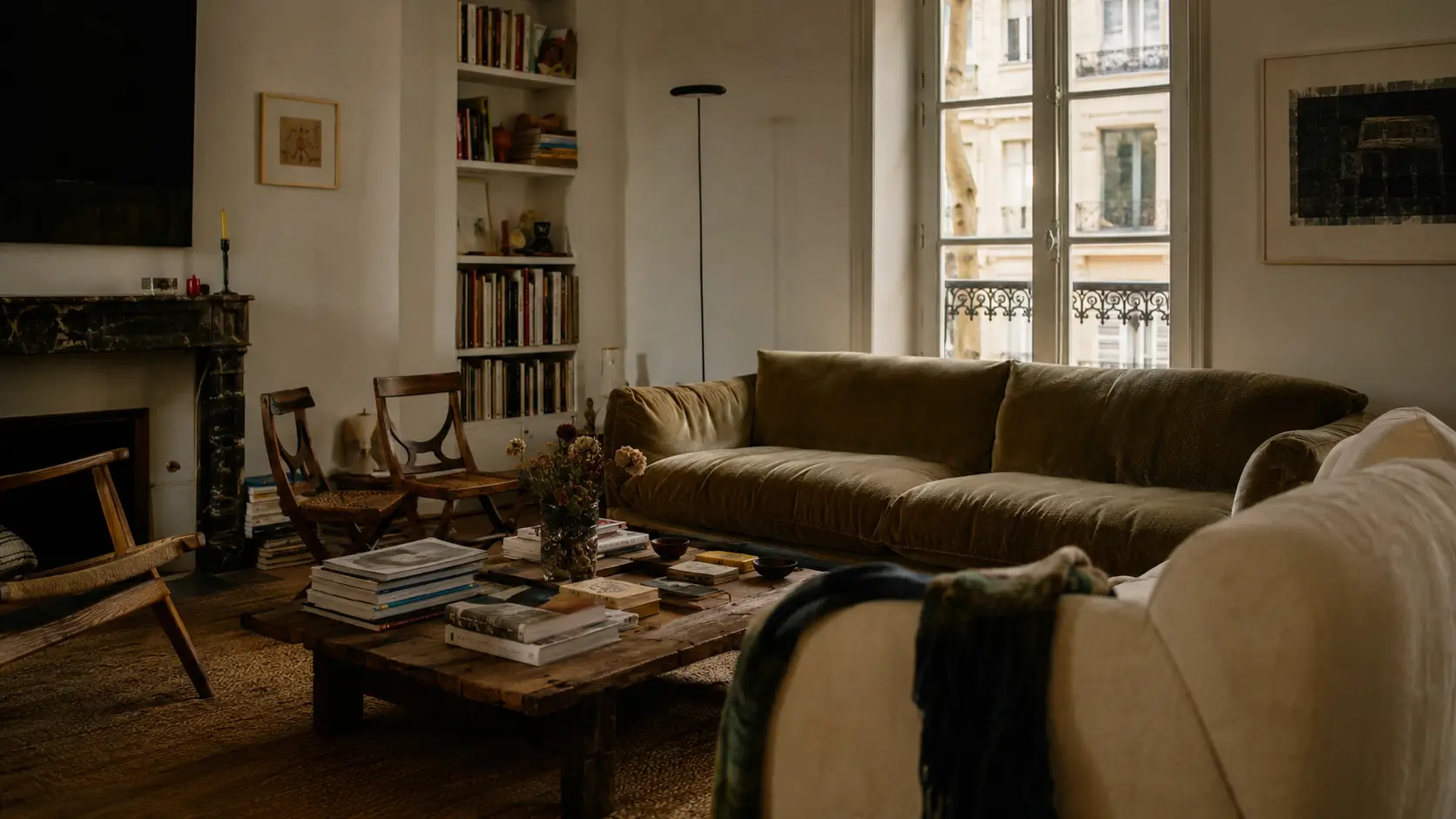
Warm minimalism keeps minimalism's discipline and removes its coldness.
Traditional minimalism runs on cool whites, grays, black, hard edges, and polished surfaces. Warm minimalism keeps the restraint and the empty space but swaps the materials underneath: creamy whites, oatmeal, beige, tan, taupe, chocolate browns, occasional terracotta, and muted sage.
Kathy Kuo, the designer behind Kathy Kuo Home, describes it as taking minimalism's pared-back look and layering in warmth, texture, organic shapes, and natural materials.
The framing from Danielle Davis of 56th Street Design Studio is particularly sharp: she calls it the answer for people who don't want to dip into maximalism but want more out of their space. That's the actual audience. People who tried the all-white room, found it exhausting, and don't want to solve it by buying clutter.
If you've read interiors coverage over the past decade, you've seen declarations that minimalism is dead. It has been announced almost every single year.
Warm minimalism is what actually happened instead. Not a replacement, but an evolution.
Marcia Bryan of Bryan Design Group describes designers moving toward warmer, collected rooms that sit comfortably between minimalism and maximalism. When House Beautiful surveyed designers on what to drop, they named sterile minimalism alongside extreme maximalism in the same breath.
There's harder market evidence too: Benjamin Moore named Silhouette AF-655, a deep espresso brown, its 2026 Color of the Year. Their color director Andrea Magno cited "the growing interest in the brown color family." Their previous selection was brown-family as well—marking two consecutive years a major paint manufacturer committed inventory to warm, deep neutrals.
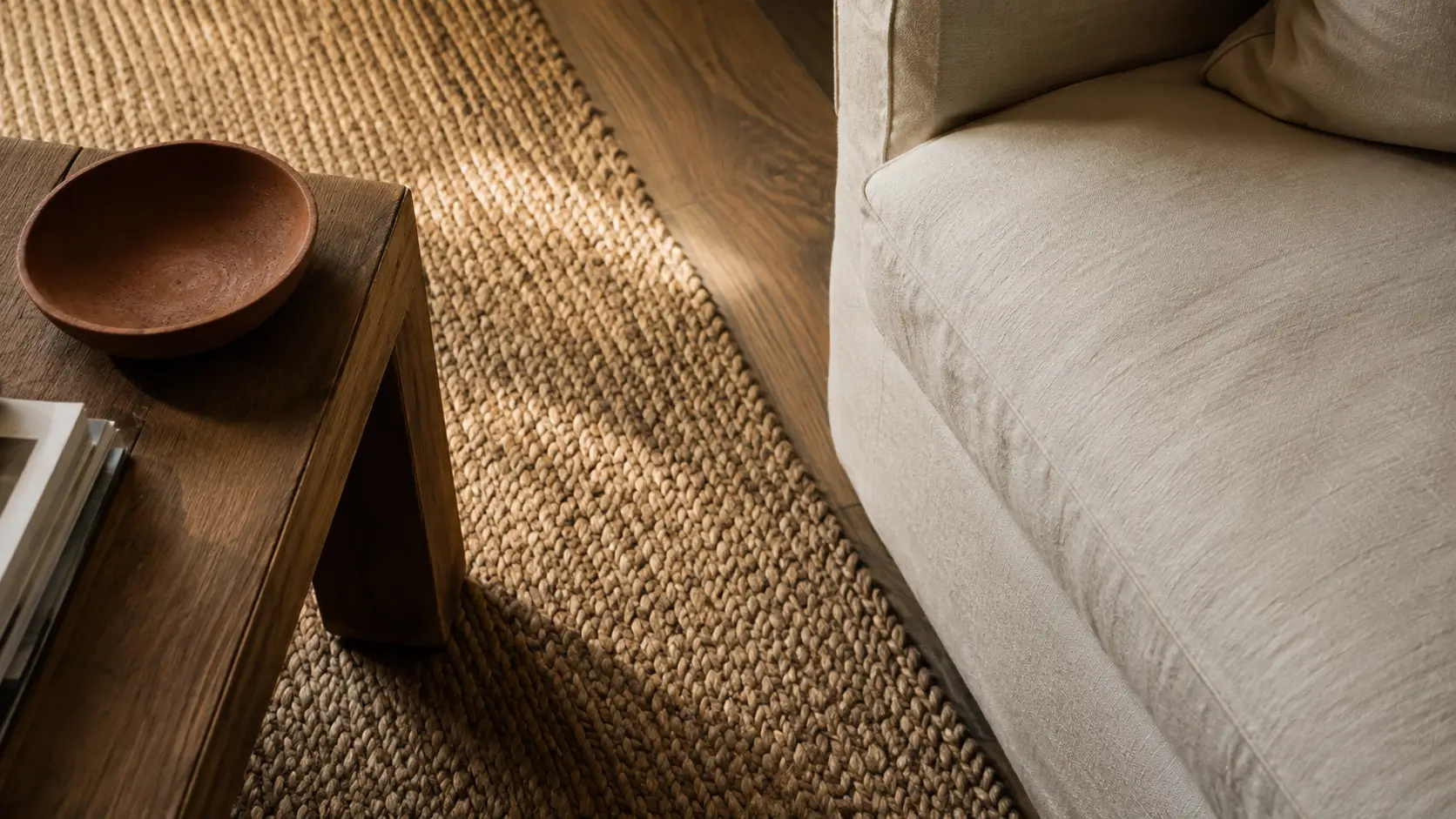
A warm minimalist room and a beige room look identical in a photograph and feel completely different in person.
The difference is entirely textural. If every surface is smooth—painted walls, flat rugs, uniform upholstery—you've built a beige box, not a warm minimalist room. The style relies on contrasting tactile surfaces: rough jute against smooth linen, matte ceramic against oiled wood, heavy wool against stone.
Every decor guide tells you to add wood. Architect Matea Rajčić of Kreartiva Design offers a crucial caution: wood brings warmth, but overloading the space or mixing too many contrasting timber species creates visual chaos. Pick one dominant wood tone, allow at most one accent timber, and stop there.
Decorators love the phrase "quality over quantity." That is a budget statement dressed as a design philosophy.
Traditional minimalism had economic appeal—fewer items meant lower spending. Warm minimalism changes that equation. In a room with only eight objects, every item is visible from every angle. Cheap synthetics have nowhere to hide. Solid timber, real linen, wool, and natural stone cost significantly more than synthetic equivalents.
The Budget Workaround: Designer Taniya Nayak suggests building a neutral foundation with swappable decor layers on top. Invest in permanent anchors—the sofa, rug, flooring, and wall paint—while keeping cushions, throws, and tabletop accessories budget-friendly and adaptable.
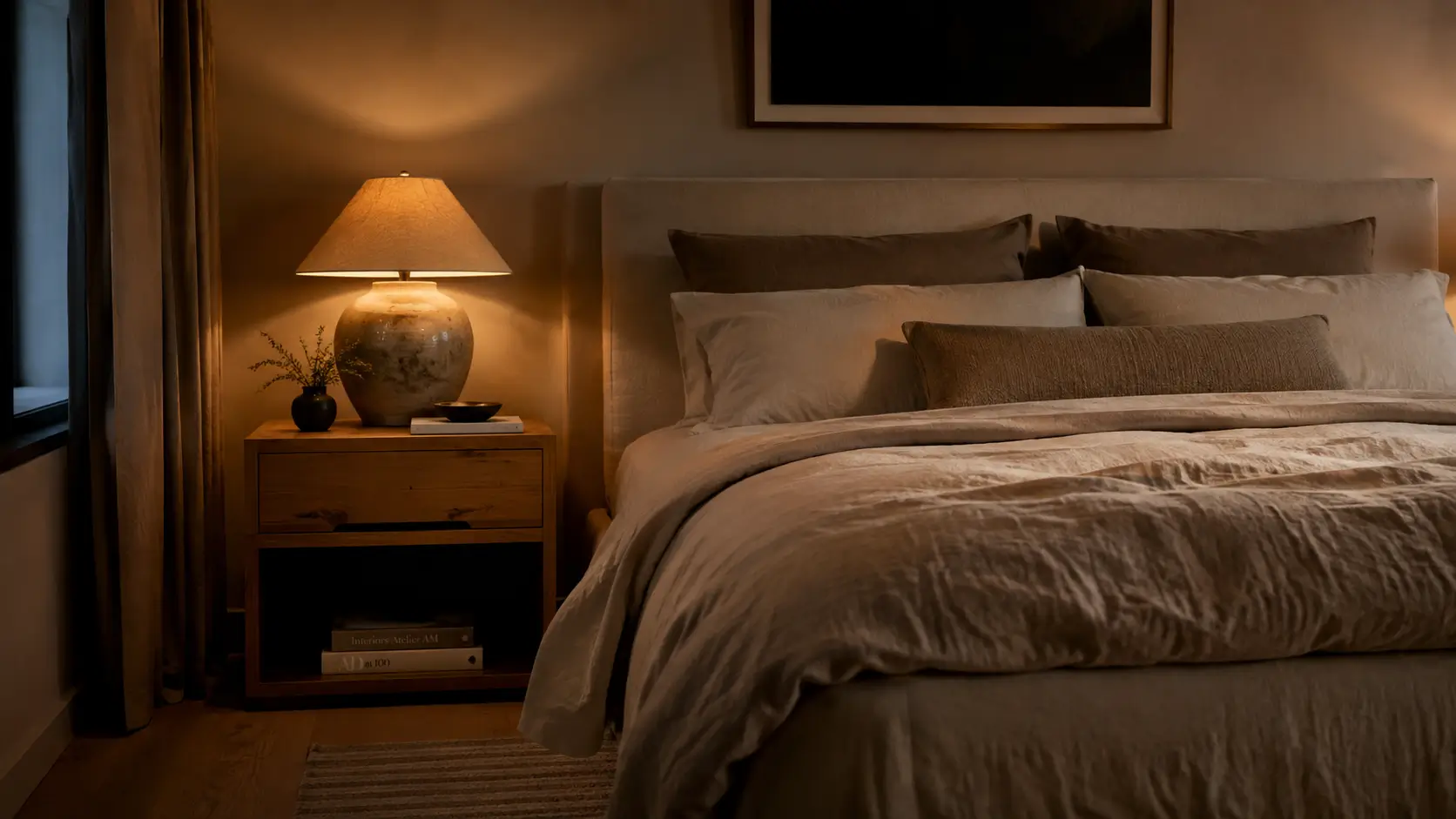
A style that maintains clean lines and uncluttered space while replacing cool, hard surfaces with warm neutrals and layered natural textures like linen, wool, wood, and stone.
No. Japandi is a specific fusion of Japanese and Scandinavian traditions with explicit formal rules (low seating, specific joinery). Warm minimalism is broader. All Japandi rooms are warm minimalist, but not all warm minimalist rooms are Japandi.
No. Sterile, clinical minimalism has faded, but it has evolved into warm minimalism rather than being replaced by extreme clutter.
Written by
Bigelow Designs EditorialKeep reading
Warm minimalism interior design requires 55 to 75 LRV paints, 2700K lighting, and 0.80 NRC acoustics. Master tactile palettes and architectural reduction.
8 min read
A US export dated 18 June 2026 shows 9,930 home decor searches with seller intent against 1,525,350 consumer searches. Advertisers pay 4.4 times more for them.
8 min read
A modern house does not cost $162 per square foot to build. That figure is 2024 direct cost only. See the corrected math and the modern premium.
9 min read
The Insider Circle
Craving more interior inspiration? Watch our exclusive behind-the-scenes room tours on TikTok and join our Facebook community for daily design secrets.
Join the conversation
Thoughts, questions, or your own experience with this piece? Sign in with your Facebook profile to reply.

