

Room Guides
How to Design a Room Like an Interior Designer: 13 Numbers
How to design a room like an interior designer, in the right order, with the 13 measurements pros work to and what each step costs if you hire it.
15 min read
Choose the right decorative vase by size, shape, material and placement, with practical styling ideas for flowers, shelves, tables and empty corners.
The best vase is not simply the one that matches your color palette. It is the one that does the job your room needs: holding a bouquet, adding height to a console, softening a shelf, filling an empty corner, or standing on its own as a sculptural object.
To choose well, decide on the vase’s purpose first. Then check its scale, shape, material, stability, and placement. This order prevents a common mistake: buying a beautiful vessel that is too small for the surface, too narrow for the arrangement, or not suitable for water.
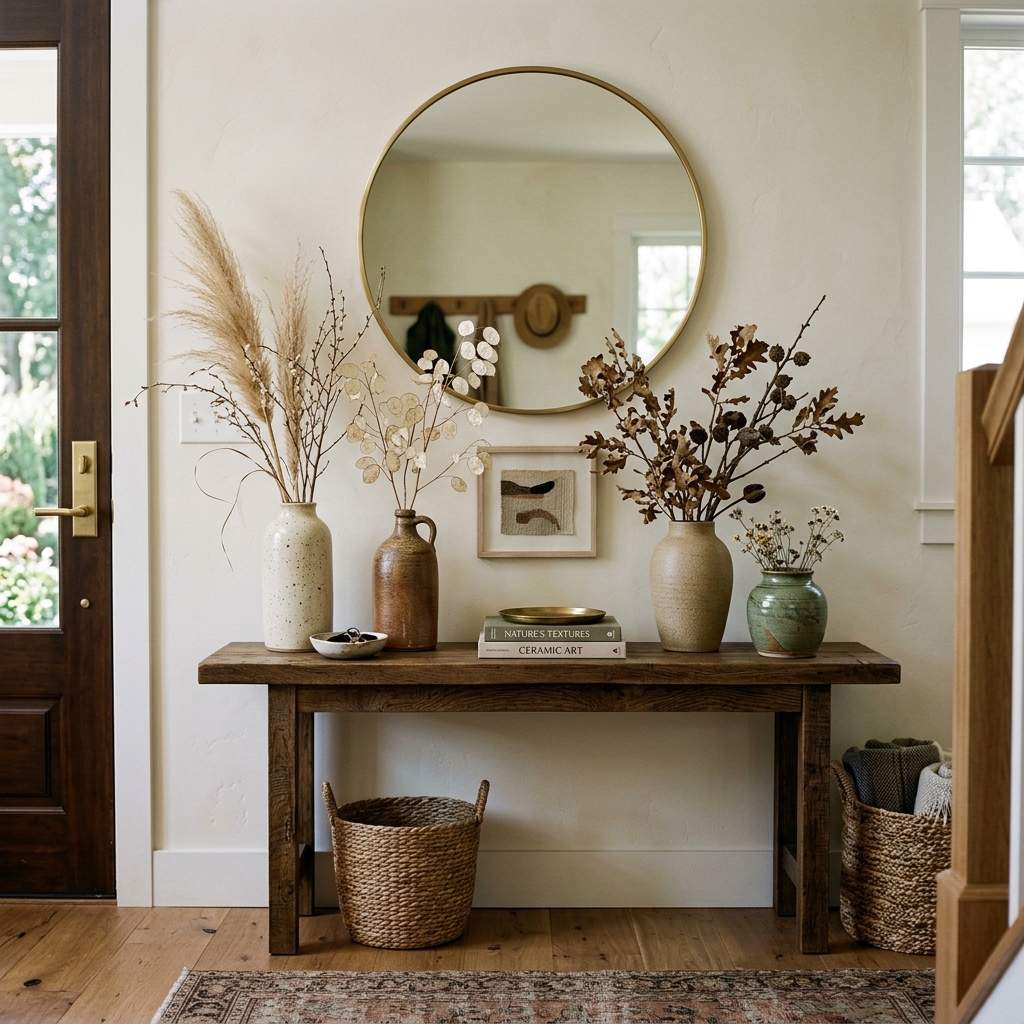
Use these five questions before you buy:
If you cannot answer the first two questions, pause. A vase chosen only by color often becomes another object that gets moved from room to room without ever feeling right.
Different roles call for different forms.
| Intended use | Useful starting shape | What to check |
|---|---|---|
| One to three flowers | Bud vase or narrow neck | Small opening that supports individual stems |
| Everyday bouquet | Cylinder or gently curved vase | Stable base and enough opening for the stems |
| Loose garden arrangement | Wider body with a moderate neck | Room for branching stems without losing support |
| Dining centerpiece | Low bowl or short vase | Sightlines across the table |
| Empty sculptural display | Distinctive silhouette or textured finish | Form that looks complete without filler |
| Large floor arrangement | Tall, weighty vessel | Tip resistance and a safe walking path |
A decorative vase can be beautiful empty. It does not need faux stems simply because it is called a vase. If the silhouette, glaze, carving, or color already gives the eye something to enjoy, negative space may be the better styling choice.
Judge the vase against the furniture and the room, not against your hand in a store.
A small vase can disappear on a wide dining table. A tall branch arrangement can overwhelm a narrow console. A floor vase that looks dramatic in a product photograph may obstruct a walkway in a compact room.
Try this simple mock-up:
For flowers, the UC Master Gardener Program gives a broad starting point: the flowers are often around one to two times the height of the vase. It also notes that a centerpiece should stay low enough for people to see over it. Treat both as starting tests, then adjust for the room and the flowers you actually have. (See the UC ANR flower-arranging guide).
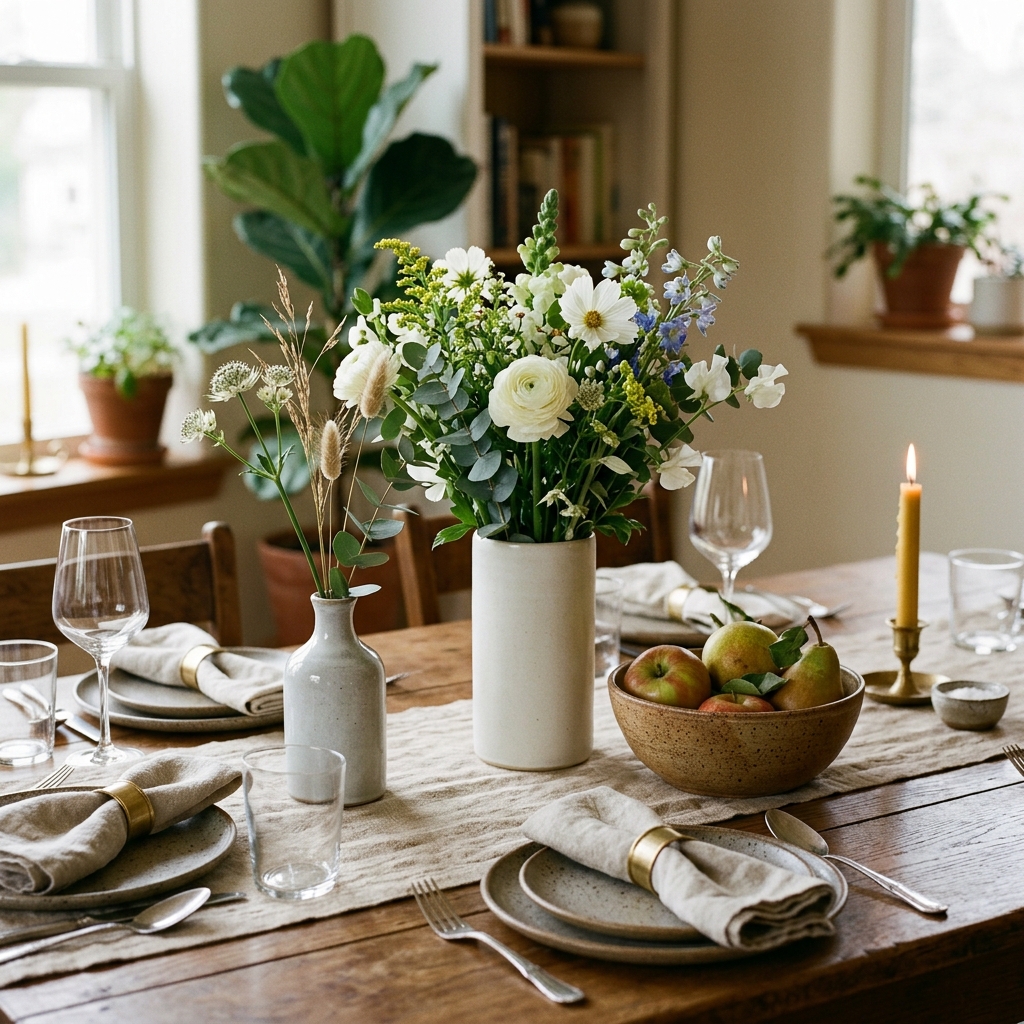
The opening changes how the stems behave.
A narrow neck gathers stems closely and helps a few flowers stand upright. It is useful for bud vases, long branches, and simple arrangements where each stem matters.
Straight-sided cylinders are flexible and easy to understand visually. They suit compact bouquets and repeated stems, but a very wide cylinder may need more flowers or a support grid to prevent the arrangement from falling outward.
A wider body provides water capacity while a narrower neck gathers the bouquet. This is a practical all-purpose form for many casual arrangements.
Low vessels work well on dining and coffee tables because they can create presence without blocking the view. Some arrangements require a flower frog, waterproof tape grid, or other support.
Iowa State University Extension explains that successful floral arrangements depend on proportion and balance as well as line, space, texture, form, color, and size. (Review the floral-design principles).
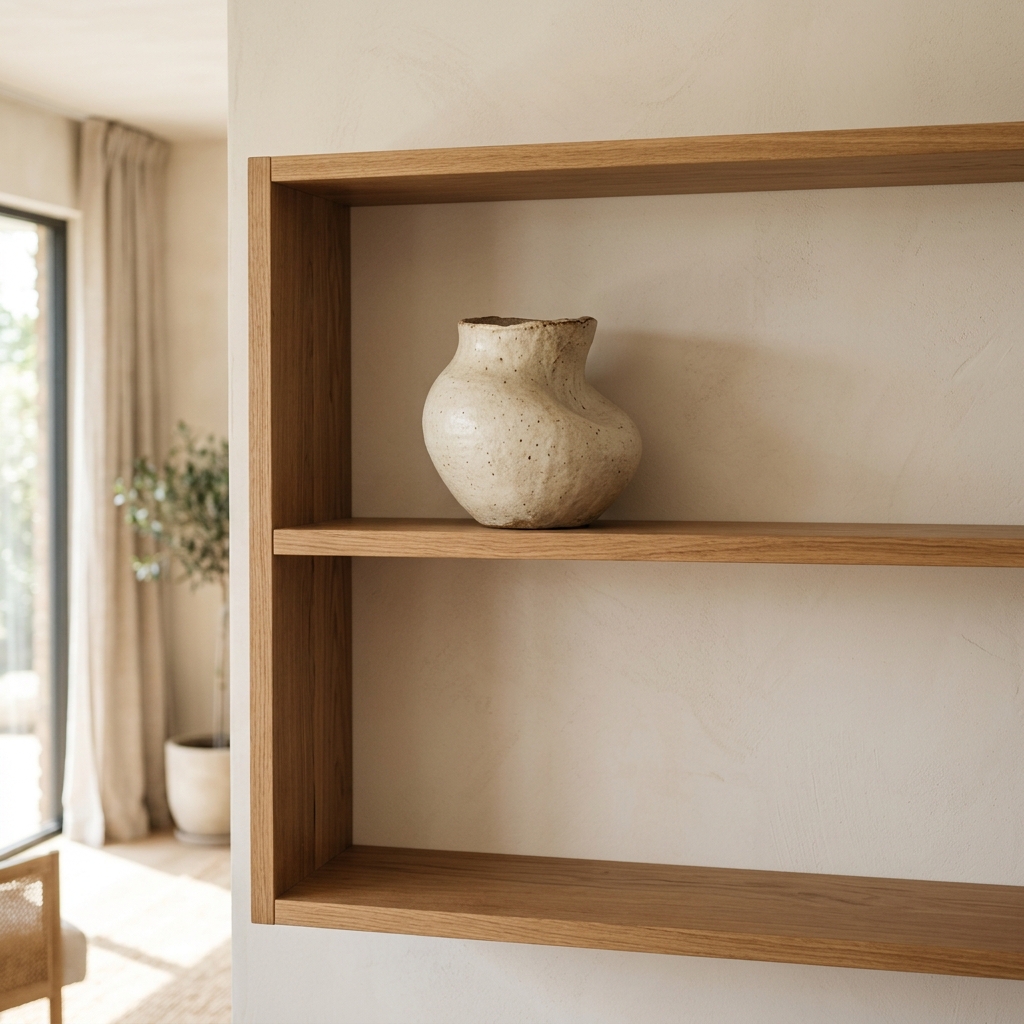
You do not need to match every object. Instead, create one or two relationships:
The aim is visual connection, not a matching set. A vase should look as though it belongs to the room while still bringing something the room did not already have: height, curve, color, texture, or movement.
Start with a genuinely clean vessel. Penn State Extension recommends washing the vase in hot, soapy water and removing residue before use. It also explains that commercial floral preservatives may help manage water conditions and bacterial growth. (Read Penn State’s flower-care guidance).
Then:
Choose the vase by purpose, then let your taste finish the decision.
The most useful vase is not necessarily the trendiest or most neutral. It is the one that fits its surface, supports what you want to display, works safely in the room, and still looks like something you would choose even after the current season changes.
Start with the bouquet’s stem count and height. A useful first test is to make the visible flowers roughly one to two times the vase height, then adjust for the flower type and location.
Yes. Sculptural shapes, strong glazes, patterned surfaces, and handmade forms can work as standalone objects. Simple vessels may benefit from stems, but that is a preference rather than a rule.
A stable vase with a moderately wide body and a narrower neck is a practical all-purpose choice because it holds water while gathering stems. No shape is best for every bouquet.
No. Check the product specifications or maker’s care instructions. Some ceramic vessels are decorative and may require a liner.
Prioritize sightlines and table space. Use a low arrangement or several small bud vases so guests can see one another and serving dishes still fit.
Written by
Bigelow Designs EditorialKeep reading
How to design a room like an interior designer, in the right order, with the 13 measurements pros work to and what each step costs if you hire it.
15 min read
Hallway ideas require 36 inches of clear walking width and 100 to 150 lux. Learn exact clearance math, runner margins, and shallow storage sizing.
9 min read
Explore practical home decor ideas for every room and budget, with clear tips on layout, lighting, color, safety and renter-friendly updates.
9 min read
The Insider Circle
Craving more interior inspiration? Watch our exclusive behind-the-scenes room tours on TikTok and join our Facebook community for daily design secrets.
Join the conversation
Thoughts, questions, or your own experience with this piece? Sign in with your Facebook profile to reply.

